The old freight pricing playbook is breaking down
For years, long term freight contracts in South Asia were built on a simple assumption. Fuel would move, but not violently enough to destroy a six month or twelve month rate commitment. That assumption is now dangerously outdated.
In 2026, fuel is no longer just another cost line. It has become a strategic risk variable. LNG procurement costs, bunker price swings, marine war risk premiums, inland diesel resets, and insurance surcharges are now colliding inside the same shipment economics. For Bangladesh linked trade lanes, that collision matters more than many shippers still admit.
The issue is no longer whether fuel prices move. The issue is whether rate contracts can survive when fuel moves faster than cargo cycles. That is exactly where the market is now.
Why this topic has suddenly become boardroom material
In the last few weeks, the Iran and US confrontation has turned from a geopolitical headline into a freight cost trigger. The Strait of Hormuz is not just a map point for energy traders. It is one of the world’s most critical arteries for crude, LNG, LPG and tanker traffic. Once vessel movement there becomes uncertain, every downstream cost starts reacting. For Bangladesh connected trade, that matters in three direct ways:
- LNG linked energy costs become unstable, affecting power intensive manufacturing and industrial operating costs
- Bunker fuel prices become volatile, pushing ocean carriers to revisit BAF logic, emergency surcharges and validity windows
- Marine insurance and routing decisions become more defensive, especially on Middle East linked shipments and feeder economics
This is why global multinationals are treating fuel volatility as a contract architecture issue, not just a procurement issue. South Asian firms, by contrast, are still too often treating it as a month end surprise.
The Bangladesh reality is more exposed than many want to admit
Bangladesh’s freight market often talks about rates as if the problem starts and ends at carrier negotiation. That is too narrow.
Chattogram handled a record 34.09 lakh TEUs in 2025 and still carries the overwhelming bulk of the country’s trade. That means any instability in fuel related shipping cost ripples quickly into import pricing, export competitiveness, feeder allocation, inland movement planning and warehouse dwell economics.
Now add another layer. In June 2025, Bangladesh’s government cut diesel by Tk 2 per litre under the automatic fuel pricing system, while kerosene rose sharply. That single example is important because it shows a structural change. Fuel is no longer being treated as a static administered number. It is being adjusted in closer response to global markets. That means domestic transport cost predictability is also becoming weaker.
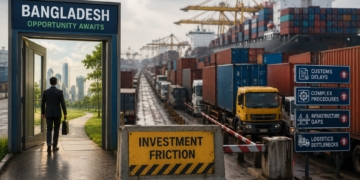
So the pressure is no longer limited to sea freight. A forwarder pricing Dhaka to Chattogram trucking, port handling, feeder transfer, mainline uplift, and destination handover under one customer commitment is now exposed on multiple fuel fronts at the same time.
What is actually happening in the trade lane
This is where many local discussions become too generic. The real impact is not theoretical. It is already visible in contract behavior. What changes first when bunker volatility rises?
- Carrier validity periods shrink
- Fixed rates become conditional rates
- BAF formulas get stricter
- Emergency recovery surcharges reappear faster
- Space allocation shifts toward yield protection, not relationship comfort
- Transit promises become more carefully worded
That last point is under discussed. When fuel spikes, carriers do not only recover cost. They protect schedule economics. Slower steaming, service rotation tweaks, omitted calls, and blank sailings can all appear in some form when cost and risk rise together. Even if a carrier does not formally announce a disruption, the contract quality changes.
For Bangladesh shippers using feeder dependent routing, that matters enormously. A mainline adjustment in the Gulf, Red Sea, or transshipment hub can distort the cost base of a shipment that was quoted days earlier from Dhaka, Narayanganj, Gazipur, or Chattogram.
LNG volatility is not just an energy story. It is a freight story.
Too many people separate LNG and logistics. That is a mistake. Bangladesh’s industrial exporters, especially in garments, ceramics, steel related sectors, and process manufacturing, are heavily exposed to energy reliability and energy pricing. If LNG procurement becomes uncertain or more expensive, the cost pressure lands inside factory output, production planning, generator dependence, and delivery confidence. That means long term freight contracts become vulnerable in a second way:
- The shipper’s own cargo readiness becomes less predictable
- Booking forecasts become less reliable
- Volume commitments become harder to honor
- Contracted freight allocations get underutilized or misused
In practical terms, this is what happens. A shipper signs a quarterly or annual ocean commitment assuming stable production cadence. Then energy cost spikes or supply tightens. Production schedules wobble. Forecasts slip. Cargo misses planned cut off. The forwarder then faces dead space risk, rolled cargo exposure, or unbalanced allocation consumption. That is not a carrier problem alone. It becomes a contract design problem across the entire chain.
Global MNCs are already ahead. South Asia is still too reactive.
Large multinationals are not waiting for the next bunker circular to act. They are changing the way they contract. Their current approach usually includes:
- Shorter validity on fixed rate commitments
- Index linked fuel adjustment clauses
- Multi scenario budgeting, not single rate budgeting
- Lane by lane surcharge trigger definitions
- Clear war risk and deviation cost pass through wording
- Internal review cycles every 15 to 30 days during geopolitical stress
- Procurement alignment between logistics, treasury, sourcing and sales
This is where the maturity gap becomes obvious. Many South Asian importers and exporters still ask one question: “Can you hold this rate for 3 months?”
That question is outdated. The better question is: “Under what fuel and risk conditions does this rate remain valid, and what is the escalation logic if those conditions break?”
That is the language global players are using. That is why they are more resilient.
The Iran and US factor is now directly embedded in freight risk
Recent developments around the Strait of Hormuz have made this painfully clear. Reuters reported that one fifth of the world’s oil and LNG flows were effectively caught in the disruption window, while shipping advisories, tanker delays, and route sensitivity intensified. Oil market reaction has been sharp enough that analysts have openly discussed triple digit Brent scenarios if disruption extends. For freight professionals, this is not abstract macro commentary. It affects:
- Bunker procurement expectations in Asia
- Tanker and energy shipping sentiment
- Insurance market pricing
- Risk appetite of vessel operators
- Carrier willingness to absorb volatility inside fixed contracts
- Customer expectations around “all in” pricing
The blunt truth is this: when geopolitical risk lifts fuel and insurance together, long term rate contracts without structured adjustment language become commercially reckless.
Where freight forwarding companies become strategically indispensable
This is the moment where strong freight forwarding businesses stop being mere booking agents and become commercial shock absorbers. A capable forwarder can create value in at least six serious ways:
1. Contract engineering
Not just quoting. Designing layered rate logic.
- Base ocean freight
- Indexed BAF review intervals
- War risk and emergency surcharge pass through
- Validity by loading window, not vague calendar promise
- Separate inland fuel review mechanism
2. Scenario pricing
One quote is no longer enough.
- Best case
- Base case
- Escalation case
- Contingency route case
This helps shippers budget properly instead of pretending volatility does not exist.
3. Carrier mix discipline
In unstable fuel markets, overreliance on one carrier or one transshipment path becomes dangerous.
- Mix feeder and mainline options
- Keep alternate transshipment hubs warm
- Use relationships that can protect space when rates turn unstable
4. Procurement intelligence
A serious forwarder watches more than freight sheets.
- Fuel trends
- Port congestion
- Insurance movements
- Transit corridor disruptions
- Regional policy shifts
That intelligence must reach the customer before the pain hits the invoice.
5. Customer education without panic
The best operators explain cost drivers early.
- Why fixed rates need conditions
- Why longer validity may need wider buffers
- Why “lowest today” can become “loss making tomorrow”
6. Margin protection with credibility
This is critical. If forwarders absorb every shock to protect a relationship, they destroy themselves. If they pass everything blindly, they lose trust. The real skill is transparent, evidence based pass through. That is what sophisticated customers respect.
The local blind spot is still dangerous
Many South Asian businesses still negotiate freight as if volatility can be bullied out of the market. It cannot.
Common mistakes remain visible:
- Demanding annual fixed rates with no fuel mechanism
- Ignoring inland diesel linkage
- Treating BAF as a negotiable nuisance instead of a structural variable
- Underpricing RFQs to win volume, then bleeding during execution
- Separating shipping from insurance and energy risk analysis
- Failing to create internal freight governance between commercial and finance teams
In Bangladesh, this is especially risky because port growth has improved throughput, but the wider logistics system still carries fragility. Rail shortages, inland movement constraints, and periodic port cost resets can compound fuel volatility instead of cushioning it. That means a bad contract can fail faster here than in a more mature logistics ecosystem.
What the new long term contract should actually look like
The market needs a reset. A modern long term freight contract in this environment should no longer be sold as a rigid fixed price instrument. It should be sold as a controlled volatility framework. That means:
- Fixed base freight with clearly defined fuel review bands
- Trigger based BAF adjustment, not arbitrary revisions
- Explicit geopolitical disruption clause
- Defined validity by shipment window and vessel cycle
- Inland fuel adjustment language for domestic trucking
- Alternate routing protocol with cost disclosure
- Space commitment tied to realistic forecast discipline
- Review checkpoints every 30 days during active geopolitical stress
This is what international standard contract thinking now looks like. Anything less is nostalgia.
Fuel uncertainty is no longer temporary noise. It is the new contract environment.
The logistics industry in Bangladesh is entering a more demanding phase. Port volumes are rising. Customers want global service standards. Trade lanes are more interconnected. But fuel and geopolitical volatility are exposing an uncomfortable truth.
Old style rate cards are not enough anymore.
LNG instability can distort factory readiness. Bunker swings can erase ocean margins overnight. Iran and US tensions can reshape freight math far beyond the Gulf. And when that happens, the companies that survive are not the ones quoting cheapest. They are the ones structuring smartest.
That is the real shift.
In this market, freight forwarding companies that can interpret energy risk, translate it into contract logic, protect capacity, and educate customers with commercial discipline will quietly become more valuable than many carriers themselves.
The next era of logistics in South Asia will not belong to the loudest rate negotiators. It will belong to the operators who understand that fuel is no longer a surcharge issue.
It is now a strategy issue. Κέντρο Luxorion
Reference
- Barua, D. (2026) Shipping costs spiral as Iran war prompts new surcharges. The Daily Star, 15 March.(Accessed: 29 March 2026).
- Star Business Report (2026) Restive Hormuz puts Bangladesh’s LNG lifeline in peril. The Daily Star, 3 March. (Accessed: 29 March 2026).
- Reuters (2026) Global oil, gas shipping costs surge as Iran vows to close Strait of Hormuz. The Daily Star, 3 March. (Accessed: 29 March 2026).
- Rahman, M.A. (2026) LNG imports from long-term suppliers to rise 54pc in 2026. The Financial Express, 4 January. (Accessed: 29 March 2026).
- Islam, M.N. (2025) Bangladesh’s energy security: Iran-Israel War stalls LPG shipments. The Daily Star, 23 June. (Accessed: 29 March 2026).
- AFP (2025) Asian countries most vulnerable to Strait of Hormuz blockade. The Daily Star, 23 June. (Accessed: 29 March 2026).
- Rahman, M.A. (2025) BD to rely heavily on LNG this yr. The Financial Express, 1 January. (Accessed: 29 March 2026).
- Rahman, M.A. (2025) Bangladesh to raise long-term LNG import. The Financial Express, 29 September. (Accessed: 29 March 2026).
- Rahman, A. (2026) Bangladesh’s energy future clouded by LNG risks. The Daily Star, 14 March. (Accessed: 29 March 2026).
- Reuters (2026) Gulf oil producers scramble to bypass Hormuz as Iran locks down the strait. The Daily Star, 18 March. (Accessed: 29 March 2026).