The Quiet Power Shift Behind Global Trade
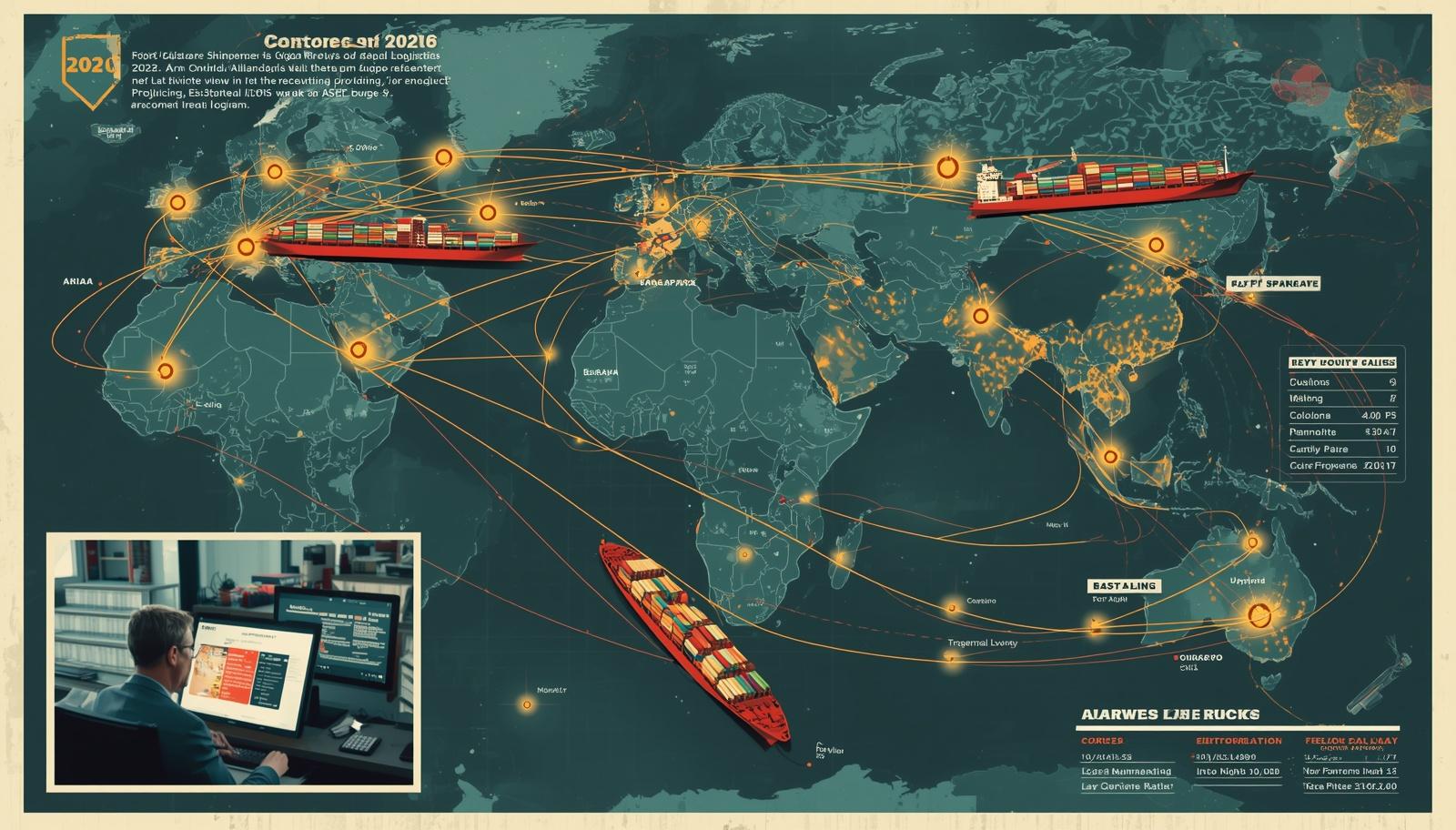
The global container shipping industry is not driven only by ships, ports, or cargo volumes. It is shaped quietly but decisively by alliances. In 2026, these alliances are no longer just operational collaborations. They are strategic weapons that determine which trade lanes thrive, which ports grow, and which freight markets tighten or loosen.
Over the past decade, three major alliances dominated global container shipping. That structure is now fragmenting. What is emerging is more fluid, more competitive, and far less predictable. The consequences are already visible across Asia, including Bangladesh, where freight rates, transit reliability, and equipment availability are directly influenced by decisions made far outside the region.
The shift is structural, not temporary.
From Stability to Strategic Realignment
Until recently, the industry operated under three dominant alliances:
- 2M Alliance
- Ocean Alliance
- THE Alliance
This structure brought predictability. Vessel sharing agreements reduced costs. Sailing schedules were coordinated. Capacity was managed with relative discipline.
That stability has now been disrupted.
The termination of the 2M Alliance between Maersk and MSC is one of the most significant structural breaks in recent shipping history. MSC has moved aggressively toward operating independently, deploying its own global network. Maersk, on the other hand, has pivoted toward a new partnership model with Hapag Lloyd under what is now known as the Gemini Cooperation, expected to be fully operational from 2025 onward.
At the same time:
- Ocean Alliance continues with CMA CGM, COSCO, Evergreen, and OOCL
- THE Alliance members are adjusting their positions under competitive pressure
- Independent carriers are expanding selectively
This is not just reshuffling. It is a complete redesign of how global capacity is deployed.
What Is Changing on the Ground
The impact of these alliance shifts is already visible in real trade lanes connecting Asia to Europe, the Middle East, and North America.
- More Direct Services, Fewer Shared Dependencies
Carriers are prioritizing direct services over shared loops. This reduces reliance on alliance partners but increases operational complexity. In practical terms:
- More port pairs are being served directly
- Transit times are becoming more competitive on key routes
- Smaller ports are being bypassed in favor of hub efficiency
For Bangladesh, this means Chattogram is facing stronger competition from transshipment hubs like Colombo and Singapore.
- Capacity Deployment Is Becoming Aggressive
With MSC expanding independently, vessel deployment has increased on major east west corridors. This has already created downward pressure on freight rates during certain periods of 2025 and early 2026.
However, this is not uniform.
- Asia to Europe rates fluctuate sharply depending on capacity injections
- Asia to Middle East lanes remain relatively stable due to consistent demand
- South Asia including Bangladesh sees indirect impact through feeder dependency
- Schedule Reliability Is Improving Selectively
According to data published by UNCTAD and port performance reports, schedule reliability improved in late 2024 and early 2025 compared to pandemic disruption years. But the improvement is uneven.
- Mainline routes show higher reliability
- Feeder dependent routes like Bangladesh remain exposed to delays
This gap is critical for freight forwarders.
Bangladesh at the Edge of Alliance Decisions
Bangladesh does not sit at the center of global alliance planning. It sits at the edge. Yet the consequences are immediate.
Chattogram Port handles over 90 percent of the country’s containerized trade. According to the Chattogram Port Authority annual reports, container throughput has consistently grown, crossing 3 million TEUs in recent years.
But growth alone is not enough.
The real issue is connectivity.
Most deep sea vessels do not call Bangladesh directly. Cargo moves through transshipment hubs:
- Colombo
- Singapore
- Port Klang
When alliances restructure their mainline services, these hubs are the first to adjust. Bangladesh feels the impact indirectly:
- Feeder vessel availability changes
- Transshipment dwell time increases or decreases
- Freight rates fluctuate without local control
A simple schedule change in a mainline service between Asia and Europe can delay Bangladeshi exports by days.
Real Case Scenario: Export Delays in Peak Season
During the peak export season of late 2024, garment exporters in Bangladesh faced unexpected delays.
What happened:
- Mainline carriers adjusted their Asia Europe loops under alliance restructuring
- Colombo faced congestion due to increased transshipment volumes
- Feeder vessels to Chattogram were delayed
The result:
- Export containers missed mother vessel connections
- Shipment lead times increased by 5 to 7 days
- Buyers imposed pressure for faster delivery
This was not due to local inefficiency. It was a direct outcome of alliance level decisions.
Freight Forwarders Are No Longer Middlemen
This evolving structure has quietly elevated the role of freight forwarders.
In the old model:
- Forwarders booked space
- Carriers controlled routing
In the new model:
- Routing decisions are fragmented
- Capacity visibility is limited
- Service reliability varies by carrier
This creates a new requirement. Freight forwarders must act as network designers, not just service providers. Key capabilities now required:
- Deep understanding of alliance structures
- Real time tracking of service changes
- Ability to switch routing quickly between carriers
- Strong relationships with multiple shipping lines
For a local operator in Bangladesh, this is a strategic opportunity.
Instead of relying on a single carrier or alliance, diversified carrier engagement becomes essential. The ability to move cargo via multiple hubs based on real time conditions is now a competitive advantage.
The Hidden Opportunity in Fragmentation
Fragmentation is often seen as risk. In reality, it creates opportunity.
- Space Negotiation Flexibility
With carriers operating more independently, freight forwarders can negotiate across multiple options instead of being locked into alliance controlled capacity.
- Alternative Routing Strategies
When one hub faces congestion, cargo can be redirected:
- Via Singapore instead of Colombo
- Via Port Klang instead of direct feeder dependency
- Value Added Services Become Critical
Clients no longer want just booking confirmation. They want:
- Predictability
- Risk mitigation
- Transparent communication
This shifts the conversation from price to performance.
Bangladesh Shipping Corporation: A Strategic Gap Waiting to Be Filled
Bangladesh Shipping Corporation currently operates in bulk and limited container segments. Its presence in global container shipping alliances is minimal.
Yet the structural shift in alliances creates a rare window. If positioned correctly, BSC can evolve beyond its current scope.
Key possibilities:
- Strategic slot agreements with major carriers
- Regional feeder network expansion in Bay of Bengal
- Joint ventures with mid sized global operators
The advantage is geographical.
Bangladesh sits between India, Southeast Asia, and key Indian Ocean routes. A strong national carrier can act as a regional connector rather than a global competitor. To reach international standards, three areas require focus:
- Fleet modernization with fuel efficient container vessels
- Digital integration with global booking platforms
- Operational reliability matching private carriers
Evidence from global shipping shows that mid sized regional carriers can succeed if they focus on niche connectivity rather than scale competition.
Infrastructure Pressure Will Increase
Alliance restructuring also places pressure on port infrastructure. Chattogram Port already faces:
- Yard congestion during peak periods
- Limited draft restricting large vessel entry
- Dependence on feeder services
According to reports from the Ministry of Shipping and Bangladesh Bank trade data, container volume growth continues, but infrastructure expansion is slower. This mismatch will intensify.
Matarbari Deep Sea Port is expected to address some of these challenges. Once operational, it can:
- Allow direct calls by larger vessels
- Reduce dependence on transshipment
- Improve transit time
However, alliance participation will determine its success. Without integration into major shipping networks, infrastructure alone will not deliver results.
The Red Sea Factor and Route Volatility
Recent disruptions in the Red Sea have forced carriers to reroute vessels around the Cape of Good Hope. This has had measurable effects:
- Increased transit time
- Higher fuel costs
- Reduced effective capacity
Alliance flexibility becomes critical in such scenarios. Carriers with diversified networks can adapt faster. Independent operators face higher risk but also higher control.
For Bangladesh exporters:
- Freight cost volatility increases
- Delivery timelines become uncertain
- Contract negotiation becomes more complex
This reinforces the need for strong logistics planning at the local level.
A New Playbook for 2026 and Beyond
The container shipping industry is entering a phase where alliances are no longer stable structures. They are evolving frameworks. For stakeholders in Bangladesh, the playbook must change.
For Freight Forwarders
- Build multi carrier relationships
- Invest in real time shipment visibility
- Develop routing flexibility
For Exporters
- Avoid dependency on single service routes
- Plan buffer time in supply chains
- Work with forwarders who understand alliance dynamics
For Government and Regulators
- Accelerate port infrastructure development
- Encourage national carrier expansion
- Facilitate digital integration with global shipping systems
The Strategic Question That Defines the Future
The central question is no longer about freight rates or transit time. It is about control.
Who controls routing decisions
Who controls capacity access
Who controls service reliability
Alliances used to centralize this control. The current shift is redistributing it. For Bangladesh, this redistribution can either be a vulnerability or a strategic advantage. The difference will depend on how quickly local capabilities evolve to match global structural change. Tatranium AI
References
- Chattogram Port Authority (2024) Annual Report 2023-2024.
- UNCTAD (2024) Review of Maritime Transport 2024.
- Bangladesh Bank (2025) Annual Report on Foreign Trade Statistics.
- Ministry of Shipping, Government of Bangladesh (2024) Maritime Transport and Port Development Updates.
- Lloyd’s List (2024) End of 2M Alliance and Industry Impact Analysis.
- Drewry Maritime Research (2025) Container Forecaster Report.
- Alphaliner (2025) Top 100 Container Carriers and Alliance Structures.