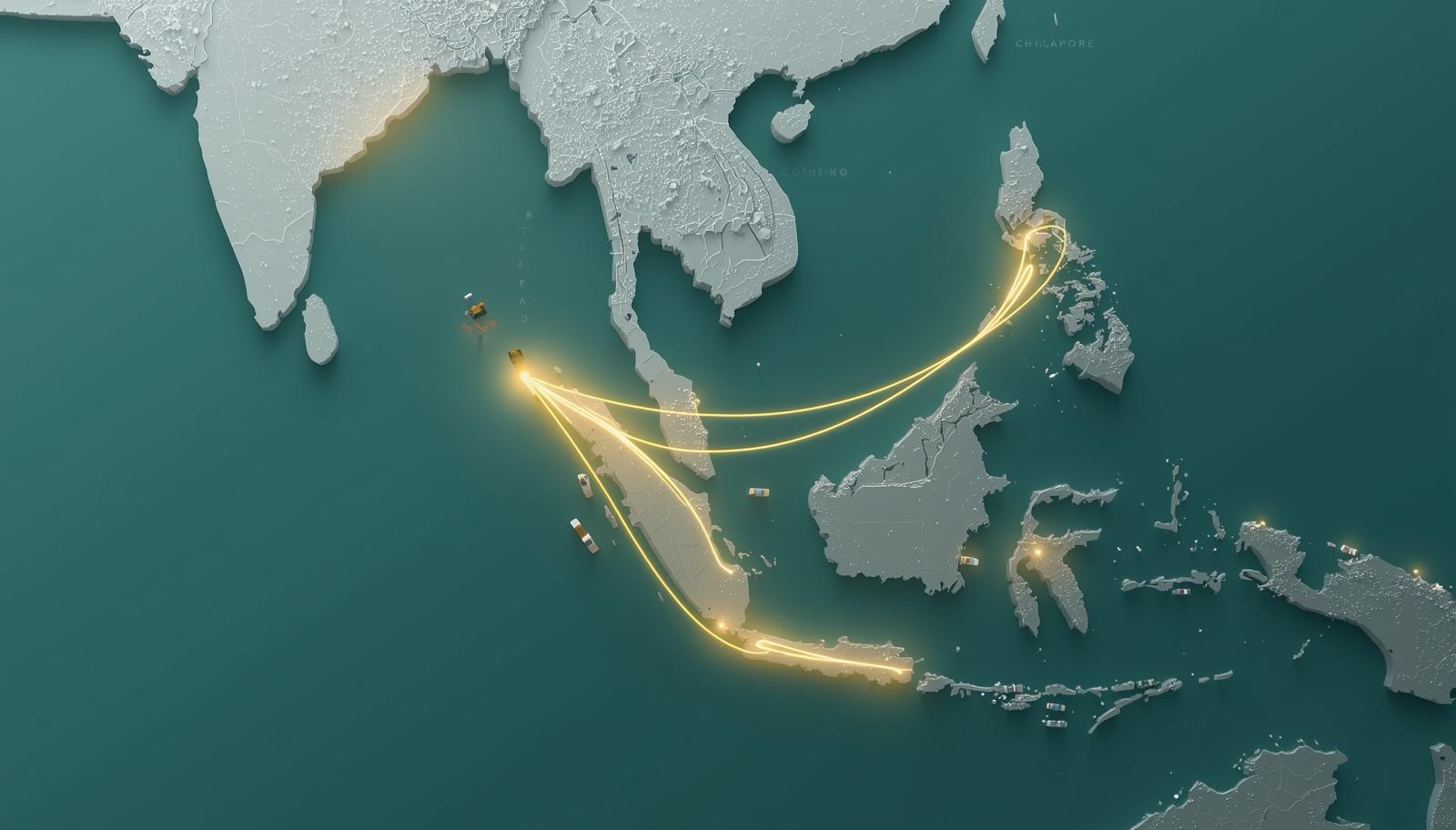
In the shifting landscape of global maritime trade, ports that once functioned merely as national gateways are increasingly transforming into strategic transshipment hubs. The classic giants Singapore Port and Port of Colombo have long dominated Asia’s shipping networks. But now, with a surge of interest by global terminal operators in Chattogram Port, Bangladesh may be stepping onto the stage as a serious contender. As foreign firms take over or prepare to run key terminals at Chattogram, the dynamics of freight flows between South Asia and beyond could shift with material consequences for importers, exporters, and the geopolitical calculus of supply chains.
⚓ Chattogram Port’s new players who’s running what
Chattogram Port’s ambition to become a regional hub is no longer wishful thinking. Several major international terminal operators are now involved, each bringing global standards, deep pockets, and a stake in reshaping South Asia’s freight map. The key developments:
| Terminal / Project | Foreign Operator(s) | Status / Significance |
| Patenga Container Terminal (PCT) | Red Sea Gateway Terminal (RSGT, Saudi Arabia -based) | Already operating first internationally-run container terminal in Bangladesh. Demonstrates that global operators see long-term value in Chattogram. |
| Laldia Terminal | APM Terminals (Netherlands-based, part of Maersk) | Agreement signed November 2025 for 30-year construction and operation. If implemented smoothly, could bring world-class container handling capacity. |
| New Mooring Container Terminal (NCT) | DP World (UAE-based) | Lease plans underway; final agreements still pending amid legal and regulatory challenges. If successfully transferred, NCT will significantly expand port throughput capacity. |
| Bay Terminal (under construction) | Joint interest by DP World and PSA International (Singapore) | Under discussion indicates major foreign investment and strategic interest in Chattogram’s potential as a key regional hub. |
These developments are part of a broader initiative by the Bangladeshi government and port authorities to modernize and “internationalize” Chattogram Port boosting capacity, attracting foreign investment, and positioning the port not just as a national gateway, but as a transshipment node for South Asia.
🌍 Why these matters: What foreign operator participation does for Chattogram
The entry of global firms into Chattogram Port is consequential and not just symbolically. It changes the calculus for carriers, freight forwarders, and cargo owners regionally and globally. Here’s why:
✅ Global-standard infrastructure & operations
Operators like APM Terminals, DP World, PSA and RSGT bring world-class operational standards: deep-sea berths, container yard capacity, efficient container handling equipment, computerized logistics, and experience managing heavy container throughput. That raises Chattogram’s ability to serve as a serious transshipment hub not just a domestic port.
✅ Credibility for global carriers
For container carriers, reliability and predictability matter as much as cost. Knowing that terminals are run by experienced global operators reduces perceived risk: operational delays, container damage, customs inefficiencies problems that often deter usage of smaller or lesser-equipped ports. With major firms managing terminals, carriers and shipping alliances may be more willing to deploy feeder services via Chattogram or even integrate it into broader east -west loops.
✅ Increased capacity to handle transshipment traffic
As more terminals come online under foreign operators, Chattogram will likely see expansion in throughput capacity. Once Laldia, NCT or Bay Terminal become fully operational, container volume capacity will rise substantially enabling not just Bangladesh-origin cargo, but third-country transshipment flows.
✅ Strategic geographic advantage Bengal and the Bay of Bengal corridor
Chattogram sits at a favorable location to service trade flows across the Bay of Bengal linking Bangladesh, India’s eastern ports, Myanmar, and Southeast Asia. As intra-Asia trade grows, a well-equipped, efficiently run port in Chattogram can serve as a regional node potentially reducing reliance on more distant hubs like Singapore or even Colombo.
✅ Potential cost and time advantages for regional trade and Bangladesh imports/exports
If port operations, hinterland connectivity, and feeder services scale up, Chattogram could offer competitive possibly lower port charges and faster turnaround times for regional transshipment compared to using distant hubs. This could translate into lower landed costs, shorter lead times and enhanced supply-chain resilience for Bangladeshi traders.
🌐 Hub Wars: How Chattogram’s rise reshuffles the regional transshipment map
With Chattogram strengthening, the regional balance among major hubs may shift. Here’s how the competition plays out among the three contenders and what it means for freight flows:
-
Singapore Port the global gateway with legacy advantage
Singapore remains the default for long-haul Asia -Europe, Asia -Middle East, and East -West global container flows. Its infrastructure, deep draft, frequency of sailings, and global feeder network remain hard to match. For large volumes destined for Europe or North America, many carriers will likely continue to route through Singapore.
-
Port of Colombo regional transshipment pivot under pressure
Colombo has long served as a regional hub especially for South Asia and as a transshipment node for India, Bangladesh, and beyond. But with Chattogram now capturing serious interest backed by global operators’ carriers may begin diverting some regional flows to Chattogram. If Colombo fails to stay competitively efficient or politically stable, its position could erode over time.
-
Chattogram Port rising challenger
Chattogram is no longer a peripheral player. With multiple foreign operators’ involvement, it stands a chance to emerge as a third major hub in the region especially for Bay of Bengal trade, Bangladesh-India trade, and intra-Asia regional flows. Over 3 -5 years, if execution is good and infrastructure keeps pace, Chattogram could attract feeder services from major carriers, offering competitive cost and timing for regional cargo.
-
Hybrid, flexible routing becomes the norm
Rather than a zero-sum tug-of-war, what’s more likely is a dynamic ecosystem:
-
- Long-haul global flows may still go via Singapore;
- Regional South Asia / Southeast Asia / Bay of Bengal traffic may increasingly go via Chattogram;
- Colombo may retain part of its share particularly for South Asia -Middle East trades but will face increasing competition.
This dynamic selection will depend on cost, reliability, destination, and carrier alliances.
🔎 What Bangladesh importers, exporters & policymakers should do now
Given this evolving context, stakeholders in Bangladesh from exporters to logistics policymakers have a strategic window to shape outcomes and leverage the emerging opportunity. Here’s a recommended playbook:
-
Encourage and monitor terminal development and connectivity
-
- Fast-track the infrastructure upgrades promised under the Laldia, NCT, and Bay Terminal projects.
- Ensure hinterland connectivity roads, rail, container depots, efficient customs so that port capacity translates into real logistic benefits.
- Monitor timelines, transparency and regulatory clarity, given some legal challenges (e.g., NCT lease).
-
Engage with global carriers and freight forwarders
-
- Exporters and importers should approach carriers / forwarders about potential feeder services via Chattogram. Show aggregated demand volume commitment improves likelihood of route inclusion.
- Freight forwarders should prove viability: cargo volumes, consistency, cargo mix a compelling business case will drive carrier investment in feeder loops.
-
Promote Bangladesh as a regional logistics hub not just an exporter base
-
- Government and port authorities should market Chattogram internationally: participation in maritime conferences, offering incentives for third-country transshipment cargo, and ensuring operational transparency.
- Streamline customs, port procedures, and port-side services to build trust among foreign shippers.
-
Segment goods and plan optimal routing
-
- For long-haul shipments to Europe/North America: likely still via Singapore (or global hubs) until Chattogram fully integrates into global east -west loops.
- For regional trade (South Asia ↔ Southeast Asia, intra-Bay of Bengal, Bangladesh ↔ Middle East, etc.): increasingly viable to route through Chattogram especially if feeder services and port capacity scale up.
- Keep freight and delivery lead-times under review: as port throughput increases, demurrage, inland transport and customs delays must be addressed to realize time/cost benefits fully.
-
Advocate for transparent public-private partnerships and accountability
-
- Given national interest, it is critical that terminal leases, operations, and contracts remain transparent, with clear accountability to avoid the kinds of inefficiencies, corruption, or bottlenecks that plague many developing-country ports.
- Regulatory oversight, clear tariff structures, and consistent policy will encourage more carriers to trust Chattogram.
⚠️ Risks and Challenges What could derail Chattogram’s rise
Despite the promise, several risks remain and they are real:
-
Legal and regulatory uncertainty
As in the case of NCT, lease arrangements can be contested; unresolved litigation could delay or reverse progress.
-
Infrastructure gaps beyond terminals
Deep-sea berths, container yards, hinterland transport, customs processing, container depots any weak link will blunt port competitiveness.
-
Carrier inertia and alliance dynamics
Global carriers and alliances have long-established loops; shifting those requires strong incentives. Without guaranteed volume, carriers may resist adding Chattogram-based feeder services.
-
Regional geopolitical & economic instability
Port-related investments and logistics flows depend on stable governance. Economic fluctuations, policy changes, or geopolitical tensions could undermine confidence.
-
Competition from other hubs
Colombo and Singapore remain formidable; they could respond with their own investments or incentives, maintaining their dominance.
🔮 What to watch in 2026-2028: Key signals that will show if Chattogram is winning
To gauge whether Chattogram is truly emerging as a third major hub or just another “hopeful contender” tracks the following indicators over the next 2-3 years:
- Announcements of new feeder loops connecting Chattogram with Southeast Asia, Middle East, India, etc.
- Significant increase in transshipment volume at Chattogram especially non-Bangladesh origin/destination traffic.
- Completion and operationalization of Laldia, NCT, and Bay Terminals under foreign operators.
- Clear improvements in hinterland infrastructure, customs clearance, and inland transport networks.
- Public-private partnership frameworks, transparent tariffs, and regulatory stability making Chattogram internationally competitive.
- Shippers and freight forwarders increasingly quoting Chattogram as a default hub for regional trade not just national imports/exports.
🎯 Chattogram’s Moment: From National Port to Regional Player
The involvement of global terminal operators RSGT, APM Terminals/Maersk, DP World, PSA International transforms Chattogram from a national port into a credible contender in the regional transshipment hub competition. This is not incremental it changes the game.
For Bangladesh, this represents an opportunity to not only reduce dependence on foreign hubs but to claim a stake in the global shipping network. For carriers, it offers a new node in a zone of rising intra-Asia and Bay-of-Bengal trade flows. For businesses importers, exporters, manufacturers it offers potential reductions in freight cost, improved lead times and more control over logistics.
But the promise will only materialize if infrastructure, governance, and demand converge. If Bangladesh can deliver on the terminal upgrades and build the surrounding ecosystem roads, customs, container depots, service reliability Chattogram might not just join the hub war: it could win a meaningful share.
In the coming years, the global shipping map may look quite different with Chattogram on it. Zignalor
References
- Asian Development Bank (ADB) 2024, Bay of Bengal Logistics Outlook: Port Competitiveness & Connectivity, ADB, Manila.
- Bangladesh Ministry of Shipping 2025, National Port Modernization Roadmap 2025–2030, Government of Bangladesh, Dhaka.
- Chattogram Port Authority (CPA) 2025, Annual Container Throughput Report 2024–25, CPA, Chattogram.
- Daily Star 2025, ‘DP World’s takeover of NCT faces legal hurdles’, The Daily Star, 12 February.
- Financial Times 2025, ‘Red Sea crisis reshapes global shipping routes as carriers continue Cape diversions’, Financial Times, 10 January.
- JOC (Journal of Commerce) 2025, ‘RSGT begins full-scale operations at Bangladesh’s PCT’, Journal of Commerce, 21 March.
- Lloyd’s List 2025, ‘Global terminal operators eye Bay of Bengal expansion’, Lloyd’s List, 5 February.
- Reuters 2025, ‘Sri Lanka secures China-backed expansion at CICT as India boosts Colombo West Container Terminal’, Reuters, 14 January.
- Straits Times 2025, ‘PSA boosts transshipment automation amid rising Bay of Bengal demand’, The Straits Times, 20 January.
- UNCTAD 2024, Review of Maritime Transport 2024, United Nations Conference on Trade and Development, Geneva.
- World Bank 2024, Port Performance and Logistics Benchmarking: South Asia Edition, World Bank, Washington DC.