

By 2030, the world is expected to see a radical transformation in freight transport. Policy makers in Europe are mandating a phase-out of diesel trucks, U.S. states like California are enforcing zero-emission truck sales mandates, and big manufacturers are promising fleets of electric heavy vehicles. The hype is undeniable.
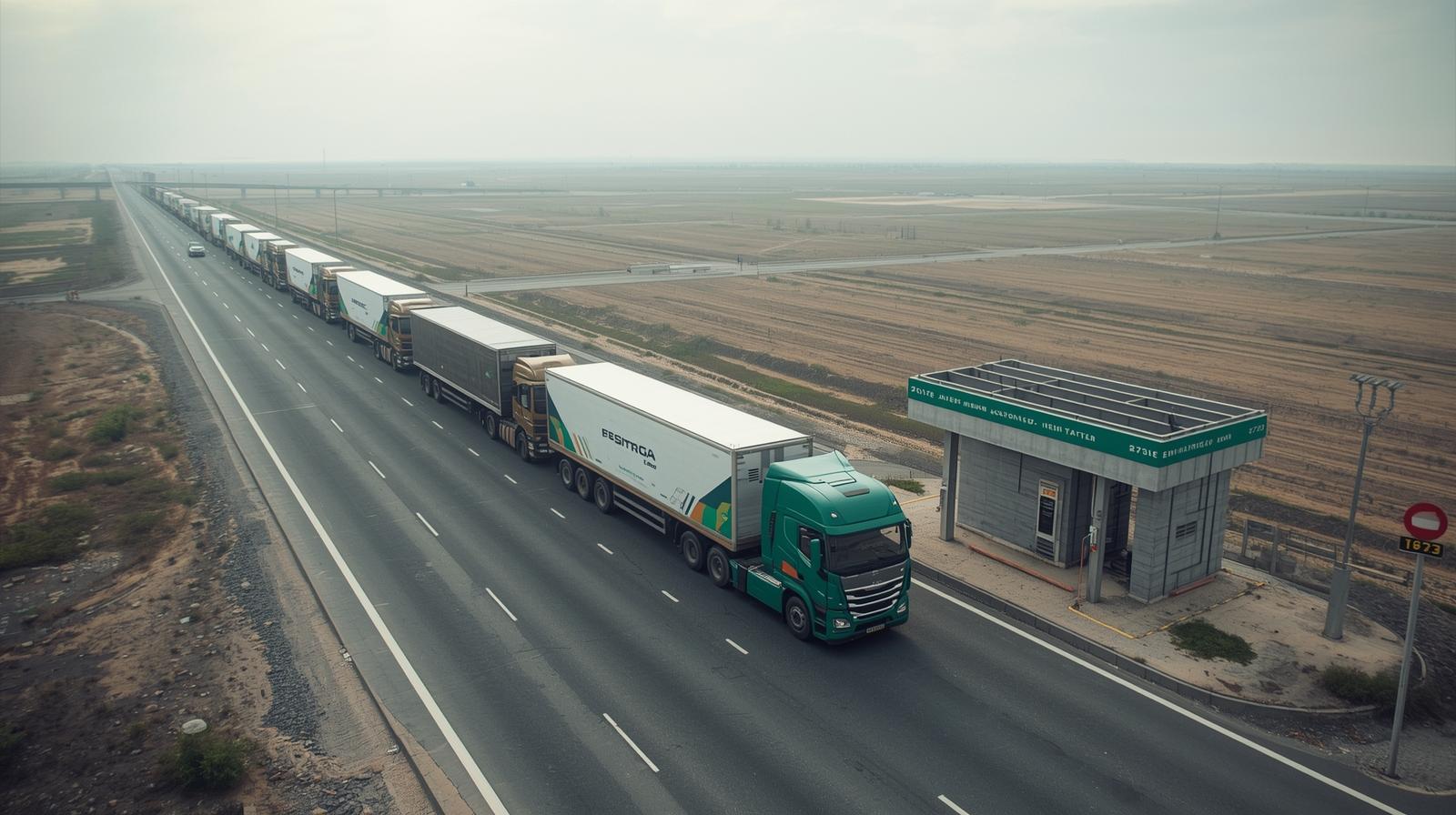
But in Bangladesh, the story is very different. Today, not a single heavy-duty electric truck operates commercially. Only a few companies like Akij and Palki are experimenting with trial runs of smaller electric vehicles, mostly in urban settings. For long-haul transport, particularly on the Dhaka-Chittagong corridor, which carries 90% of the nation’s freight trucks, electric mobility remains nothing more than theory.
This article examines why the 2030 electric truck vision is unrealistic for Bangladesh. We combine global comparisons, local case studies, and logistics insider analysis to present a reality check.
Global Targets vs. Bangladesh Reality
Globally, electric truck adoption is accelerating. The EU’s “Fit for 55” policy mandates a 90% reduction in truck CO₂ emissions by 2040. The U.S. has rolled out the Advanced Clean Truck (ACT) rule in California, requiring 55% of new Class 2b-3 truck sales and 75% of Class 4-8 truck sales to be zero-emission by 2035.
Manufacturers are aligning too. Daimler’s Freightliner eCascadia, Volvo’s VNR Electric, and Tesla’s Semi have begun pilot operations in North America and Europe.
Now compare that with Bangladesh:
- Zero heavy-duty e-trucks in operation.
- Limited e-vehicle pilots: Akij and Palki with light-duty EVs.
- Policy silence: No clear government roadmap for e-trucks.
Global vs. Bangladesh Electric Truck Adoption (2025)
|
Region |
Adoption (2025) |
Notes |
| EU | 15,000+ | Widespread deployment across member states |
| USA | 10,000+ | Focused on pilots and regional hauls |
| China | 50,000+ | Dominant in short-haul logistics |
| Bangladesh | 0 | No adoption yet |
This stark comparison shows the gap- Bangladesh is at least 10 years behind the global curve.
Bangladesh’s Current Position
Bangladesh’s freight backbone relies on diesel. More than 95% of road freight runs on conventional trucks, mostly old, reconditioned imports from Japan or India.
The Dhaka-Chittagong highway is the country’s logistics lifeline. An estimated 90% of truck movements are concentrated on this corridor. Any transition to electric mobility must start here — but it is precisely this highway that highlights the deepest problems.
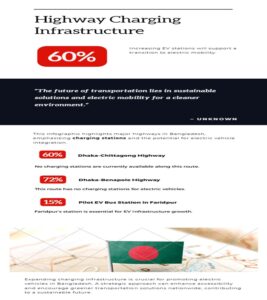
- Charging deserts: No public charging points between Dhaka and Chittagong.
- Heavy payloads: The corridor’s trucks carry containerized cargo, requiring high battery capacity.
- Traffic congestion: Stop-and-go traffic worsens energy consumption.
The Dhaka-Benapole highway, another key trade route, faces similar issues. But it is the Dhaka-Chittagong axis where failure to electrify would hit hardest.
Challenges Blocking Progress
Infrastructure Gap
The biggest roadblock is charging. Unlike Europe, which is investing billions in megachargers for trucks, Bangladesh has no charging stations for freight corridors. The only pilot is a BRTA-backed project in Faridpur for electric buses, not trucks.
Battery Costs
Heavy-duty truck batteries remain prohibitively expensive. Industry benchmarks (IEA, 2024) suggest battery packs cost USD 130 per kWh. A long-haul truck requires 600-1,000 kWh, putting the battery cost alone above USD 80,000 — more than double the cost of a diesel truck in Bangladesh.
Diesel vs. Electric Truck Cost Comparison (Bangladesh, 2025)
| Aspect | Diesel Truck | Electric Truck |
| Purchase Price | ~USD 40,000 (lower upfront) | ~USD 120,000 (high upfront, major entry barrier) |
| Fuel/Energy Cost | High ongoing fuel expenses | Lower operating cost (electricity cheaper than diesel) |
| Maintenance | Frequent servicing, engine wear | Lower maintenance (fewer moving parts) |
| Infrastructure | Well-established fuel stations | Very limited charging infrastructure |
| Environmental Impact | High emissions | Zero tailpipe emissions |
| Adoption Barrier | Affordable entry, but costly long-term | High upfront cost, but cheaper long-term operations |
Grid Reliability
Bangladesh struggles with load shedding. High-capacity charging demands megawatts of stable electricity. In Dhaka alone, blackouts remain a common reality. Without a resilient grid, charging hubs cannot function.
Policy Vacuum
While India offers subsidies for e-trucks and the EU provides tax relief, Bangladesh has no fiscal or regulatory framework for freight electrification.
Case Study – BRTA’s Faridpur Charging Station
The Bangladesh Road Transport Authority (BRTA) has initiated a pilot charging station in Faridpur, designed to support electric buses. According to Dhaka Tribune (2024), the project aims to assess feasibility before scaling nationwide.
But the differences between buses and trucks are significant:
- Buses operate on predictable city routes, return to depots nightly.
- Trucks operate on unpredictable long-haul schedules, require en-route charging.
This means the Faridpur experiment – while important – does not solve the logistics sector’s needs.
What If We Push Ahead Anyway?
The temptation to declare an early win on electric trucks is real. Governments often want to showcase progress, manufacturers want to sell, and businesses want to be seen as sustainable. But if Bangladesh forces electrification without groundwork, the consequences could be severe across the logistics ecosystem.
Stranded Investments
Imagine an importer brings in 200 electric trucks at a cost of USD 120,000 each – that’s a USD 24 million upfront investment. Without a network of charging stations along the Dhaka-Chittagong and Dhaka-Benapole highways, these trucks become expensive parking yard assets, not operational vehicles.
📌 Case Reference: In India’s early EV trials (2017-2019), several logistics companies abandoned electric vans because they had no charging hubs outside metro cities. The lesson: without parallel infrastructure, assets sit idle.
For Bangladesh, the risk is even higher – corridors carry heavy long-haul freight, not city parcels.
Increased Costs for Shippers and End-Consumers
Electric trucks are 2-3x costlier upfront than diesel trucks. Even if operating costs per km are lower, Bangladesh’s lack of fast chargers means trucks spend more time idle, requiring larger fleets to move the same cargo.
- Fleet owners will pass these inefficiencies to shippers.
- Shippers, in turn, will embed these costs in export prices.
- Ultimately, RMG exports to Europe and the U.S. could face higher landed costs, making Bangladesh less competitive than Vietnam or India.
For example:
- Diesel truck Dhaka-Chittagong: ~USD 400 per trip.
- Electric truck with downtime & limited charging: ~USD 600-700 per trip (modelled from IEA benchmarks).
That’s a 40-60% cost increase – unacceptable in cost-sensitive sectors like garments.
Supply Chain Disruptions
The Dhaka-Chittagong highway carries over 8,000 trucks daily. If even 10% of those are electric and face charging bottlenecks, congestion and cargo delays will rise.
Risks include:
- Missed vessel cut-offs at Chittagong port.
- Idle time at bonded warehouses.
- Penalties for exporters missing delivery schedules.
📌 Real-World Example: In California, where early charging infrastructure for e-trucks lagged behind deployment, logistics operators reported average delays of 2-3 hours per trip due to charging waits (CARB, 2023). For Bangladesh, where deadlines for export shipments are razor-thin, such delays could cripple supply chains.
Competitive Disadvantage vs. Regional Peers
Bangladesh’s logistics costs are already 15-20% higher than Vietnam’s or India’s, according to World Bank estimates. Adopting expensive e-trucks without subsidies or infrastructure would widen this gap.
- Vietnam: Investing in port electrification + urban EV corridors.
- India: Subsidies under FAME II scheme make EV adoption viable.
- Bangladesh: No subsidies, no charging hubs, yet higher capital costs.
This mismatch risks pushing foreign buyers to relocate sourcing. For industries like garments — where buyers are already exploring Ethiopia, Vietnam, and India — logistics inefficiency could be the final tipping point.
Knock-On Effects on Energy System
Even if charging hubs are built, each megacharger for trucks requires 1-3 MW of stable power. To electrify just 10% of Dhaka-Chittagong freight fleet (~800 trucks daily), Bangladesh would need power equivalent to an entire small power plant — dedicated only for trucking.
In a country still grappling with load shedding, diverting power to charging stations could create public backlash if households or industries suffer outages.
Pathway Beyond the Hype: A Realistic Roadmap for Bangladesh
Bangladesh cannot afford to fall for ambitious yet impractical 2030 targets. Instead, a phased roadmap allows the country to build the ecosystem gradually, while avoiding stranded investments and supply chain shocks. Here’s what such a strategy could look like.
Short-Term (2025-2030): Laying the Groundwork
The immediate priority should not be heavy-duty electric trucks but rather creating an ecosystem that proves EV viability in Bangladesh’s context.
Key Actions:
- Focus on Electric Buses in Urban Routes
Dhaka and Chittagong have high-density commuter demand. Introducing electric buses reduces emissions in congested zones while testing charging models.- BRTA’s pilot charging hub in Faridpur could act as a template for urban bus depots.
- Buses are centrally managed fleets, easier to electrify than fragmented trucking.
- Promote Light Electric Vehicles for Last-Mile Delivery
Companies like Akij and Palki already test light EVs. E-commerce players (Daraz, Foodpanda, Pathao) could be early adopters for 2-3 ton electric vans in Dhaka.- This builds demand for charging stations.
- Logistics companies gain operational experience with EV maintenance.
- Pilot Charging Corridors on Dhaka-Chittagong
Instead of nationwide infrastructure, focus resources on a Dhaka-Cumilla-Chittagong corridor.- Three fast-charging hubs could enable both trial buses and light trucks.
- Private investors (e.g., energy companies, solar operators) can be incentivized with PPP models.
- Policy Support:
- Import duty relief for batteries and charging equipment.
- Targeted subsidies for pilot projects instead of blanket EV incentives.
📌 Goal by 2030: 5,000 light EVs and 500 electric buses operational, three charging corridors in place. Heavy trucks remain diesel-dominant.
Medium-Term (2030-2035): Testing Heavy-Duty Applications
With infrastructure established and costs declining, Bangladesh can cautiously step into heavier freight segments.
Key Actions:
- Trial Runs of Heavy-Duty E-Trucks on Shorter Hauls
- Example: Mongla to Khulna industrial zones (~50 km) or Dhaka to Narayanganj.
- Focus on predictable, repeatable routes rather than long-haul trips.
- Introduce Tax and Credit Incentives for Importers & Operators
- Green credit facilities for fleet operators buying EV trucks.
- Reduced registration fees for e-trucks.
- Expand Charging Hubs to Secondary Corridors
- Dhaka-Benapole and Dhaka-Sylhet highways.
- Add at least one megacharger hub per 150 km.
- Public-Private Investment Drive
- Joint ventures between utilities, oil marketing companies, and logistics players.
- Solar-hybrid charging stations to reduce strain on the national grid.
📌 Goal by 2035: At least 5% of highway freight moved on electric trucks (short haul), with nationwide fast-charging access.
Long-Term (Post-2035): Scaling Up
By this stage, battery costs are expected to reach parity with diesel, and global shippers will demand carbon-neutral supply chains.
Key Actions:
- Full-Scale E-Truck Adoption on Dhaka-Chittagong Highway
- By then, Dhaka-Chittagong may host 10,000 trucks daily. Even converting 20% to electric would be a massive carbon saving.
- Integrated Grid Upgrades
- Investment in high-capacity transmission lines and renewable integration.
- Dedicated energy hubs for freight corridors.
- Green Supply Chain Certification
- Bangladeshi logistics operators can align with EU’s Carbon Border Adjustment Mechanism (CBAM), making exports more attractive to European buyers.
📌 Goal by 2040: 20-25% of heavy trucks electrified, supported by renewable-powered charging infrastructure, positioning Bangladesh as a regional leader in green logistics.
A Wake-Up Call
The vision of electric trucks in Bangladesh by 2030 is unrealistic. The infrastructure is absent, the costs are prohibitive, and the power grid is underprepared. Unlike buses or light delivery vans, long-haul freight requires a different scale of readiness.
The hype is understandable, but the wake-up call is clear: Bangladesh must build foundations first — charging networks, policy frameworks, and power resilience — before dreaming of zero-emission trucking.
Otherwise, the nation risks being stranded in charging deserts while competitors move ahead. 제니스 인베릭스
References
- Bangladesh Road Transport Authority (BRTA) 2024, Pilot project on electric buses and charging stations in Faridpur, BRTA, Dhaka. [Accessed 25 September 2025].
- BloombergNEF 2024, Electric Vehicle Outlook 2024, BloombergNEF, London. [Accessed 25 September 2025].
- Dhaka Tribune 2024, Bangladesh considers electric bus imports to reduce urban emissions, Dhaka Tribune, 18 May. [Accessed 25 September 2025].
- International Energy Agency (IEA) 2023, Global EV Outlook 2023, IEA, Paris. [Accessed 25 September 2025].
- Prothom Alo 2024, Akij and Palki Motors test electric vehicles on Bangladeshi roads, Prothom Alo, 27 June. [Accessed 25 September 2025].
- Rahman, S 2023, ‘Logistics challenges of EV adoption in South Asia’, Journal of Transport and Energy Studies, vol. 12, no. 3, pp. 145–163.
- The Business Standard 2025, EV adoption in Bangladesh still a distant dream, The Business Standard, 12 January. [Accessed 25 September 2025].
- World Bank 2022, Bangladesh: Towards Green Transport Solutions, World Bank, Washington DC. [Accessed 25 September 2025].


