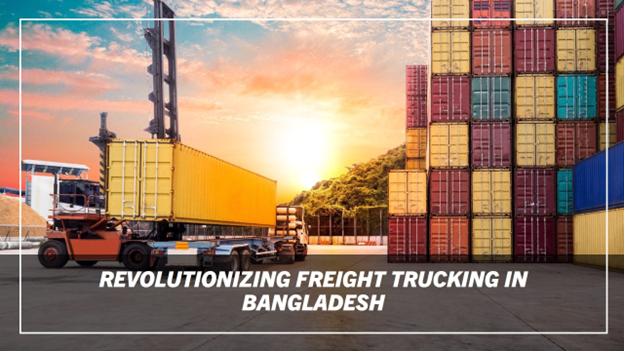
Bangladesh’s freight trucking industry stands at a transformative juncture, with technology and globally leading players collaboration leading the way. As demand for seamless logistics increases, innovative solutions and international investments are redefining the sector’s landscape.
The Role of Technology in Modernizing the Sector
The integration of digital tools is revolutionizing operations across the industry:
-
Fleet Management Systems
Advanced telematics and GPS tracking systems have become essential for route optimization, vehicle monitoring and real-time tracking. These tools have enabled companies to save costs, reduce fuel consumption, and enhance customer satisfaction.
-
Digital Freight Platforms
Platforms like Truck Lagbe, RedX, Loop Freight etc. are streamlining freight booking, promoting transparency in pricing and connecting businesses with reliable trucking services across urban and rural regions.
-
AI-Powered Predictive Maintenance
By using data analytics to forecast vehicle maintenance needs, companies are reducing downtime and improving operational efficiency.
The Growing Interest of International Players
The increasing interest of international freight forwarding organizations in Bangladesh’s land transport sector is a testament to its untapped potential.
-
Strategic Location
Bangladesh’s position as a logistics hub in South Asia, connecting India, China, and Southeast Asia, makes it a prime area for investment in multimodal transport systems, including trucking.
-
Rising Export Volume
Industries such as textiles, e-commerce, and pharmaceuticals are driving demand for efficient freight solutions, enticing global logistics providers to invest in local transport capabilities.
-
Infrastructure Development
Projects like the Padma Bridge and Expressway are enhancing connectivity between Dhaka, Chittagong, Benapole Border and other trade corridors, making land transport more viable for international companies.
Trucking and Global Supply Chains
Multinational logistics providers are increasingly relying on Bangladesh’s trucking services for first mile and last-mile deliveries.
- Companies like DB Schenker, Maersk and DHL are strengthening partnerships with local freight operators to ensure efficient cargo movement between seaports, airports, and inland destinations.
- The growing trend of cross-border trucking with India and Nepal is opening new avenues for bilateral trade, facilitated by government agreements and international logistics firms.
Opportunities for Growth and Challenges
While the sector offers immense opportunities, certain challenges persist:
-
Infrastructure Bottlenecks
Despite improvements, road conditions, congestion, and limited rest stops remain barriers to operational efficiency.
-
Lack of Standardization
Many trucking fleets lack adherence to international standards, which could deter global partnerships.
-
Technology Adoption Gaps
The upfront cost of digital tools and lack of technical expertise are hindering widespread adoption.
Future Outlook: A Collaborative Way Forward
To fully capitalize on its potential, Bangladesh’s freight trucking industry must adopt a collaborative approach:
-
Public-Private Partnerships
Joint efforts between the government and private players, both domestic and international, can accelerate infrastructure and technology upgrades.
-
Green Logistics Initiatives
Investments in fuel-efficient vehicles (BS VI Engine Module) and electric trucks can reduce the sector’s environmental impact, attracting international organizations focused on sustainability.
-
Skill Development Programs
Training programs for truck drivers and logistics managers can bridge knowledge gaps and ensure the smooth adoption of new technologies.
The transformation of Bangladesh’s freight trucking industry is not just a story of adaptation but a testament to the sector’s immense potential. By embracing cutting-edge technologies like GPS tracking, AI-driven predictive maintenance, and digital freight platforms, the industry is positioning itself for operational excellence. Moreover, the growing interest of international logistics players underscores Bangladesh’s strategic importance as a logistics hub in South Asia. However, challenges such as infrastructure bottlenecks and the high cost of innovation must be tackled collaboratively by public and private stakeholders. By fostering a culture of technological adoption and sustainability, Bangladesh can elevate its freight trucking sector into a model of modern logistics. This evolution is not just crucial for the domestic economy but also for the country’s integration into global trade networks.
References
-
Chittagong Port Authority. (2023). *Annual Report 2022-2023*. Chittagong: CPA. Available from: https://cpa.gov.bd/ (Accessed: 24 October 2023).
-
International Finance Corporation (IFC). (2022). Green Logistics: A Sustainable Path for Emerging Markets. Washington, DC: World Bank Group. Available from: https://www.ifc.org/ (Accessed: 24 October 2023).
-
Islam, M. T. & Rahman, S. (2023). ‘Digital Transformation in Road Freight: Challenges and Opportunities in Emerging Economies’, Journal of Transport and Supply Chain Management, 17(1), pp. 1-15.
-
McKinsey & Company. (2023). The Future of Logistics in Asia: Unlocking Value in a Digital Era. Available from: https://www.mckinsey.com/industries/travel-logistics-and-infrastructure/our-insights/the-future-of-logistics-in-asia (Accessed: 24 October 2023).
-
World Bank. (2022). Logistics Performance Index (LPI). Washington, DC: World Bank Group. Available from: https://lpi.worldbank.org/ (Accessed: 24 October 2023). Bitnex Crestfort