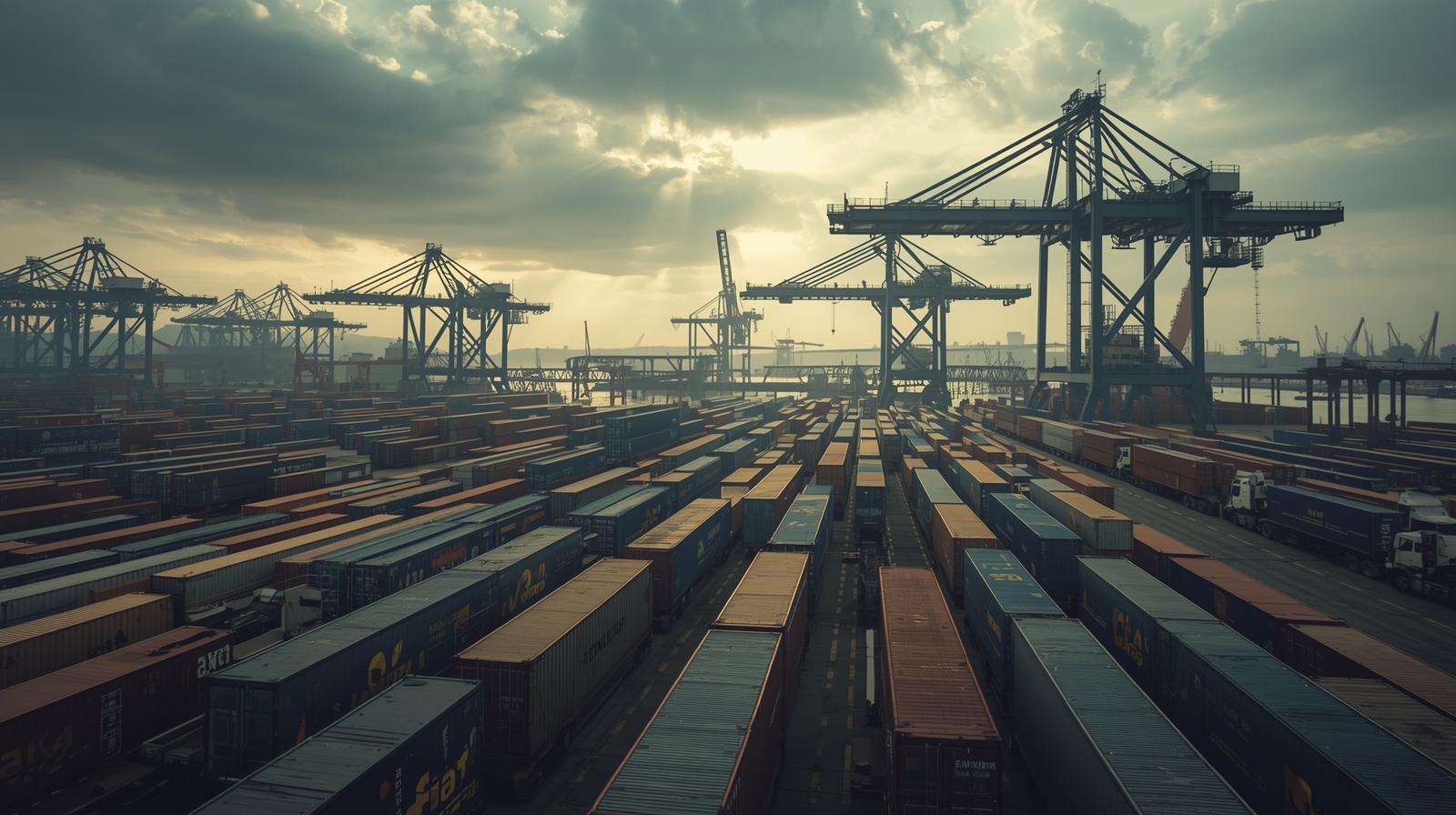
In Bangladesh’s booming trade environment, importers and freight forwarders constantly tout speed and cost-efficiency as core competitive advantages. Yet beneath the surface of record container volumes and rising logistics throughput, there lies a silent, often overlooked drain on profit demurrage and detention charges at Chittagong Port, Bangladesh’s trade gateway. These charges are not just accounting entries; they are real cash outflows that weaken import margins, distort supply chains, and erode Bangladesh’s competitive edge in global commerce.
This article examines, through verifiable evidence and real instances, why demurrage and detention are costly for importers in Bangladesh, how they arise, and what concrete steps businesses especially freight forwarders must take to manage and mitigate them. Every insight is grounded in reporting and data specific to Bangladesh’s ports and the lived experience of local import trade.
Why Demurrage and Detention Matter in Bangladesh
Both demurrage and detention are fees charged when containers stay too long either inside the port yard (demurrage) or outside with the consignee or trucker (detention), beyond the agreed “free time” period. While global in concept, their impact in Bangladesh is uniquely acute due to systemic operational delays and port inefficiencies.
- Demurrage becomes payable when import containers remain in the terminal beyond free storage time after vessel discharge.
- Detention charges are levied when the container is outside the terminal usually in the custody of the consignee or trucking operator and is returned late.
Together, they can inflate landed costs dramatically for import traders in Bangladesh, especially those dependent on just-in-time inventory.
According to international tariff listings for Bangladesh, detention/demurrage rates escalate quickly after initial free days: for example, a 20ft container is free for only the first 5 days, then costs around USD 12/day (6-8 days), USD 20/day (9-11 days), and USD 40/day thereafter if delayed, with even higher brackets for larger units like 40ft boxes.
In practical terms, if an importer fails to evacuate containers swiftly due to paperwork, transport, customs, or logistics failures these charges add up daily, in hard foreign currency. For a typical consignment containing industrial raw material or retail goods, a 10-15-day delay could add hundreds or even thousands of dollars per container to costs.
The Real Situation at Chittagong Port: Congestion and Delays
In 2025, Chittagong Port has set all-time records for container and cargo handling, with over 3.4 million TEUs processed through its facilities yet operational inefficiencies persist.
Container Congestion Is a Driver of Demurrage
Although volumes have risen, storage and yard management have lagged, leading to systemic congestion. In mid-2025, Chittagong Port yards showed unusually high container counts 48,000+ TEUs in the yard against a typical range of 32,000-35,000 TEUs contributing to slower delivery times.
Such bottlenecks mean that even when importers arrange clearance promptly, the yard availability or truck access slots may not exist to get containers out quickly, triggering demurrage a cost ultimately borne by the importer.
Inland Container Depots (ICDs) Solutions with Limits
Inland Container Depots (ICDs), meant to relieve pressure by moving containers out of the port, are only partially effective in Bangladesh. NBR has expanded what can be delivered from depots to ease congestion, but gaps remain.
Moreover, private ICDs recently deferred suspension of export and empty container handling due to disputes over tariff hikes, highlighting persistent capacity strains and cost pressures in the off-dock sector.
Importers’ Pain: Demurrage in Action
Real cases from the Bangladesh trade context illustrate how demurrage hits profits:
-
Highway Blockade & Container Pile-Up
In 2024, nationwide protests caused a temporary highway blockade that paralyzed container movement for nearly a week. As a result, importers accumulated large demurrage bills containers sat over the allowed 4-day free period, and charges kicked in at approximately USD 6/day for a 20ft box, rising if delays continued.
In this scenario, freight forwarders had to explain to clients why “force majeure” delays translated into real port cost overruns, underlining the need for visibility and risk communication.
-
NBR Strikes and Customs Standstills
Delays also occurred during the 2025 nationwide strike by National Board of Revenue (NBR) officials, which halted customs services at major ports. Such interruptions meant containers could not be cleared for customs release even if trucks were available, causing demurrage to accumulate.
Traders especially those with tight just-in-time supply chains found themselves paying storage charges not because of physical movement issues, but due to bureaucratic delays outside their control.
Breakdown of Costs Importers Actually Pay
While port tariffs are publicly published (e.g., CPA tariff schedules), demurrage and detention are often hidden until they appear on a weekly billing from the shipping line or terminal:
- Free Time: Typically, 4-5 days from vessel berthing before charges begin.
- Daily Demurrage: Rises steeply with time; a 20ft container moves from USD 12/day to USD 40/day after 11 days according to tariff listings.
- Shipping Line Rates: Carriers like ONE set combined demurrage and detention tariffs for example, from USD 15-USD 90+ depending on days delayed and container size.
- Tariff Increases: Recent tariff revisions by CPA increased container handling charges, indirectly raising the baseline for demurrage costs because ports calculate free time relative to updated tariffs.
For mid-sized importers handling multiple containers per month, these hourly and daily costs can erode profit margins by several percentage points a material impact when import margins are thin.
Why Demurrage & Detention Costs Persist in Bangladesh
The persistence of high demurrage and detention charges in Bangladesh has systemic roots:
-
Port Efficiency vs. Capacity
Though Chittagong Port has improved operational stats, efficiency is still lacking. Containers often linger longer than global norms, partly due to terminal storage being treated as de facto long-stay storage rather than quick throughput.
-
Customs and Bureaucracy
Delays in customs clearance whether due to documentation backlogs, inspections, or service stoppages like NBR strikes directly increase container dwell time, which then triggers demurrage on both port yards and depots.
-
Transport & Connectivity Gaps
The road and trucking ecosystem struggle with bottlenecks ICD access issues, trucker shortages, and congestion all contributing to containers not being picked up or returned within free time.
-
Lack of Visibility & Planning
Many importers lack end-to-end visibility of their cargo movement, meaning they cannot pre-emptively adjust logistics if delays appear likely. This is where freight forwarders can make a strategic difference.
The Freight Forwarder’s Role: Mitigating the Hidden Costs
Given the structural challenges, freight forwarding firms in Bangladesh have a mission-critical role in helping traders navigate demurrage and detention costs. Their contribution can transform these “cost killers” into managed line items:
-
Applying Proactive Container Tracking
Forwarders must invest in visibility platforms that track containers from vessel discharge to final delivery. This reduces ‘unknown risks’ the primary driver of unnecessary demurrage, as seen in global logistics case discussions.
-
Pre-Clearance Coordination
Effective coordination with customs brokers and shipping lines before vessel berthing ensures documentation is complete, reducing dwell time caused by preventable delays.
-
Strategic Use of ICDs and Off-Dock Solutions
Given constrained yard space at the port, forwarders should facilitate timely transfer to ICDs where possible, leveraging NBR’s expanded list of deliverable items, and thereby minimizing port yard stay.
-
Negotiating Free Time & Terms
Experienced forwarders can negotiate more flexible free time allowances with carriers and terminals for example, adjusting demurrage/detention windows based on realistic local conditions.
-
Educating Importers on Planning
Traders often under-estimate the lead time required to clear goods especially during peak seasons or against systemic delays. Forwarders should provide scenario-based planning that accounts for worst-case detention costs and ensures clients budget accordingly.
Internalizing the Cost Truth
Demurrage and detention are not abstract concepts; in Bangladesh they are quantifiable drains on import profitability that directly correlate with real port operational realities. Congestion, tariff changes, customs delays, and transport inefficiencies all cause containers to linger beyond free periods, triggering daily charges that quickly escalate.
Evidence from CPA data, tariff revisions, and congestion reports shows that Bangladesh’s importers are already paying these costs and often without strategic mitigation plans. Freight forwarders are uniquely positioned to help goods owners cut these hidden costs through better planning, visibility, negotiation, and coordination.
To importers grappling with profit pressures in a tight global market, ignoring demurrage and detention is no longer an option. Understanding and actively managing these costs is a logistics imperative one that can mean the difference between competitive pricing and financial leakage. Ren Sparevoll
References
- Bangladesh Private ICDs defer decision to suspend container handling (2024) Fibre2Fashion. (Accessed: 6 January 2026).
- Chittagong Port Authority reinstates higher port tariffs (2025) The Business Standard. (Accessed: 6 January 2026).
- Chittagong Port sets new records in container handling (2025) The Daily Star. (Accessed: 6 January 2026).
- Container congestion rises at Chittagong Port (2025) Bangladesh Pratidin (English Edition). (Accessed: 6 January 2026).
- Demurrage and detention tariff – Bangladesh (2020) SITC Container Lines. (Accessed: 6 January 2026).
- Demurrage waiver considered as containers pile up at Chittagong Port (2024) PSA Bangladesh. (Accessed: 6 January 2026).
- How reducing dwell time can improve Chittagong Port efficiency (2025) The Daily Star. (Accessed: 6 January 2026).
- Notice: Demurrage and detention tariff update – Bangladesh (2024) Ocean Network Express (ONE). (Accessed: 6 January 2026).