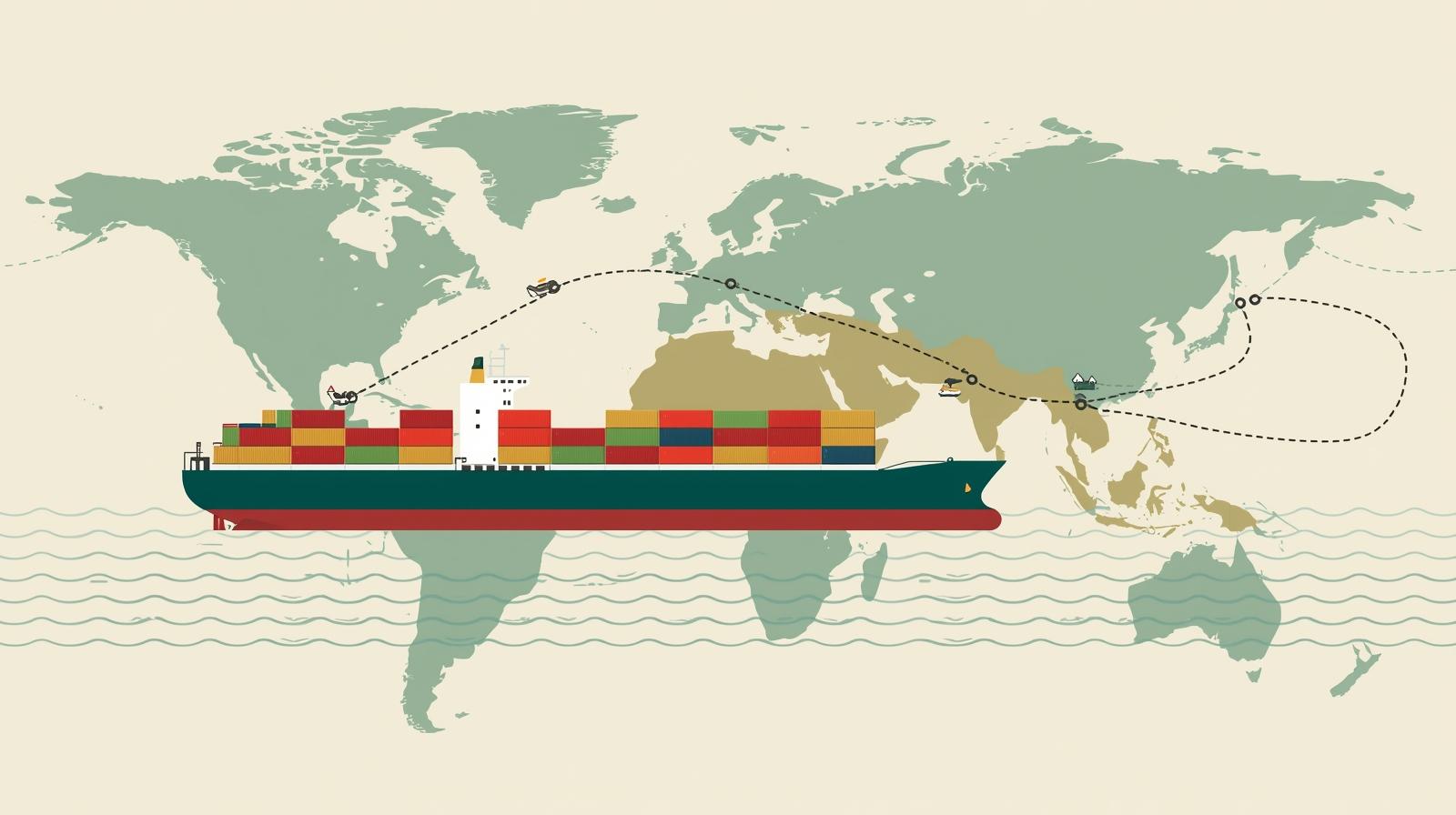
The Red Sea a narrow maritime artery that links Asia to Europe through the Suez Canal stopped being “just another shipping lane” in late 2023. What began as episodic strikes on merchant vessels evolved into a systemic disruption: repeated attacks by Yemen-based Houthi forces, temporary closures or avoidance of the Suez approach, and a large-scale reconfiguration of east west liner networks. For Bangladesh an economy anchored in garment exports, textiles, and trade flows that rely heavily on container shipping the fallout has been stark: higher freight bills, longer lead times, squeezed margins and tougher conversations between suppliers and buyers. This article pulls together the latest developments (Dec 2025) and explains, in practical terms, how rerouting via the Cape of Good Hope affects Bangladeshi importers and exporters.
The Technical Problem: Why Ships Detour and What Those Costs
When insurers, crews and line operators deem a sea corridor unsafe, carriers face a binary choice: continue through risk or detour. Since late 2023 and episodically thereafter attacks on commercial vessels in the Red Sea and Bab al-Mandeb (by sea drones, missiles and small-boat attacks) persuaded most major container lines to reroute ships south around Africa’s Cape of Good Hope. The effect is simple math: the Cape adds thousands of nautical miles to East-West voyages and adds up to 10-18 extra days of sailing time on many Asia-Europe strings. That extra time multiplies fuel consumption, crew costs, charter hire and schedule complexity and carriers pass much of that on to customers through higher freight, surcharges and insurance premiums.
A few up-front datapoints that industry players and importers should know (latest, widely reported figures):
- Transit time increases: typical Asia→ Europe transit times extended by roughly 10-18 days for many routings.
- Freight increases: spot and contract freight rates on affected strings rose by ~30-40% in the worst periods; some lane calculations put added cost at US$1,000–1,500 per 20-foot container (TEU) for Cape diversions at the height of the disruption.
- Insurance & risk premiums: war-risk and kidnap/hold premiums pushed certain cover elements from ~0.7% to around 1% of ship/cargo value in some markets another direct cost component for shippers.
Those headline numbers mask important distributional effects: large multinational retailers with long contracts and preferred carrier space can often absorb or smooth price shocks; smaller importers and many mid-sized exporters in Bangladesh feel the entire sting immediately. In Bangladesh’s garments sector, where orders are time-critical and buyers demand strict delivery windows, extra days or extra dollars matter to contracts, to cashflow, and to competitiveness.
What Changed in Late 2025 The Faintest Hint of “Return” Mixed with Caution
By late November 2025 the market saw mixed signals. A high-profile development: Maersk announced a phased, carefully managed return to some Suez transits under a new strategic arrangement with the Suez Canal Authority a move described by Egyptian authorities as an early December return for selected sailings. At the same time, Maersk and Hapag-Lloyd (the Gemini partners) publicly stressed there is no set date for a broad return of their Gemini network to Suez transits safety and the security of crew and cargo remain the deciding factors. Hapag-Lloyd’s CEO also warned any return would be gradual, with a transition window of several weeks to avoid port congestion and to preserve schedule reliability. In short: the market is moving from ‘all detours’ to ‘selective Suez reopening’ but operators remain conservative.
What this means practically is threefold for Bangladesh players: (1) some voyages may shorten again if carriers resume selected Suez sailings, (2) cost volatility will persist during the transition (short windows can push spot rates temporarily up or down), and (3) surcharges and risk assessments will endure until insurers and operators are fully comfortable. The industry’s prudent approach is driven by the memory of vessels being struck, crews lost or detained, and the severe logistical consequences of a sudden operational reversal.
How Those Changes Map to Real Costs for Bangladesh Importers & Exporters
Bangladesh’s trade structure and shipment profiles explain why this crisis bites harder there than in many richer economies.
-
Export Lead Times (RMG Commodity)
Bangladesh exports a huge share of garments on tight production calendars for European and North American retail seasons. When mother vessels avoid the Red Sea, an exporter that once expected a 30-day voyage may now face 45+ days to destination creating a two-week cushion that factories must plan for by producing earlier or by offering expedited (more expensive) transport. Many firms have reported 30%+ higher maritime charges and in some cases are forced to use partial air-lift for urgent SKUs an expensive and unsustainable stop-gap.
-
Importers of Raw Materials and Components
Manufacturers importing yarn, chemicals, spare parts or capital equipment suffer from longer lead times and unpredictability. For inventory-tight operations, this leads to either production interruptions or expensive last-minute air shipments. The knock-on effect raises unit costs and delays shipments to global brands.
-
Surcharges, Insurance and Surging Landed Cost
Shipping lines have implemented a variety of surcharges fuel, security/war risk, deviation fees and if carriers resume Suez sailings selectively, Suez transit fees themselves can be higher (Suez Canal Authority increases were reported in some cycles). The combination lifts the landed cost of a container by hundreds sometimes a thousand dollars which translates into either margin compression or higher retail prices.
-
Container Availability & Equipment Shortages
Longer round-trips mean the global container fleet is tied up for more days per voyage; Bangladesh reported shortages of 40-ft and high-cube containers during peak diversion months. Those shortages increase local demurrage, waiting times and repositioning costs.
-
Buyer Behavior and Order Flow
Some international buyers temporarily shifted sourcing away from Bangladesh during the crisis; many later returned as carriers and routing options improved. But the episode highlighted supply-chain fragility buyers can and will reallocate orders if Bangladesh can’t guarantee schedules or competitive landed costs. For an export-dependent economy, that’s an existential risk.
Real Incidents That Shaped Operator Decisions
The industry’s caution is not hypothetical. High-profile attacks and tragedies for example the attacks that sank or fatally damaged vessels in mid-2025 and the detention and later release of some crew reinforced the perception of existential risk for commercial shipping. Media and maritime intelligence outlets repeatedly documented ship strikes, crew casualties and the use of drones and unmanned surface vessels all of which fueled broad carrier decisions to avoid the corridor. These incidents are why many lines implemented the Cape network in early 2025 and why returning to Suez is being done deliberately.
Policy, Logistics and Corporate Responses What Bangladesh Can (and is) Doing
Bangladesh cannot control geopolitics in the Red Sea, but there are concrete measures public and private actors can take to reduce vulnerability.
-
Strategic Inventory Buffers & Calendar Adjustments
Companies should re-model lead times and hold slightly higher safety stock for seasonal SKUs. For many manufacturers, that means ordering earlier and smoothing production so that delays don’t cascade into lost orders.
-
Contracting Strategies
Where possible, renegotiate contract terms and INCOTERMS to clarify who bears route and premium risk. Most Bangladesh exporters ship under FOB (buyer pays freight) but long crises can push buyers to demand discounts that erode factory margins. Better communication and short-term cost-sharing mechanisms can blunt the blow.
-
Diversify Sourcing & Route Planning
For critical imports, a mix of sea and limited air (for high-value or urgent spares) plus exploring alternate transshipment hubs can help. At a national level, expanding port efficiency, digital customs and inland container depots reduce domestic friction and lower total landed cost. The World Bank and local logistics stakeholders have highlighted Bangladesh’s high logistics share of GDP (around ~16% vs ~10% global average) which suggests structural gains can be made by reducing domestic friction alone.
-
Collective Representation & Negotiation with Lines
Exporter associations (BGMEA, BKMEA) and shipping agents can coordinate to secure block space contracts, negotiate fair surcharges or ask for phased surge capacity strategies that larger consolidated shippers already use. Where exporters cluster (e.g., garment clusters), pooled contracting can re-create some bargaining power.
-
Government Diplomacy and Contingency Planning
At national scale, having trade-diplomacy channels to monitor and coordinate with shipping partners, insurers and flag states helps. Bangladesh port authorities can also priorities key export windows to minimize congestion if the Suez return is phased.
What The (partial) Return to Suez Means for Bangladesh Cautious Optimism with Caveats
The November–December 2025 signals by Maersk about a phased return are important. If a major partner like Maersk gradually brings selected services back through Suez (and if security metrics remain positive), then transit times and fuel costs for those sailings can fall offering relief to exporters and importers. But the return will not be an instant “switch off” of higher costs:
- Transition Volatility: as lines rebalance networks, short-term congestion at transshipment hubs and European ports could spike, creating pockets of delay and short bursts of elevated spot rates.
- Insurance and Risk Perception Lag: insurers and reinsurers will take time to reduce war-risk premia; shippers and buyers should expect the risk-costs to decline more slowly than transit times.
- Structural Adjustments: carriers that re-route back to Suez may keep some Cape rotations as long-term capacity hedges; the overall network will be more dynamic than before, and that dynamic means higher forecasting complexity for Bangladeshi traders.
Quick Checklist for Bangladeshi Importers & Exporters
- Recalculate Lead Times add 10–18 days to Asia→Europe/East Coast transits in worst-case scenarios.
- Talk to Buyers now be transparent about potential delays and costs; agree on contingency clauses for protracted route disruptions.
- Lock part of your container needs use medium-term contracts or pool resources with peers to avoid spot-market premiums.
- Audit inventory policy accepts slightly higher working inventory for peak seasons or for critical components.
- Ask shipping agents for a cost breakdown separate fuel surcharges, deviation surcharges and war-risk premiums to understand bargaining levers.
- Evaluate selective airfreight for urgent orders, but do the math: air is a near-order-of-magnitude more expensive and may only be practical for high-value SKUs.
Bottom Line a Resumption of “Normal” is Possible, But Normal will not Look Identical
The Red Sea crisis forced the global container industry to redesign networks at scale. Carriers proved they can detour, but detours cost time and money. Recent announcements by Maersk and the careful public statements by Hapag-Lloyd show the industry is eyeing a return to Suez a development that could reduce voyage distance and fuel burn for many services but it will be phased, data-driven and conditional on security and insurance dynamics. Bangladesh’s immediate need is to plan for both possibilities: (1) a continued period of elevated costs and longer lead times; and (2) a bumpy, partial return to shorter transits that nonetheless leaves some structural change in place.
For importers and exporters in Bangladesh, the priority is pragmatic resilience: honest communication with buyers, smarter contracting with carriers, modest inventory buffers for key SKUs, and a renewed focus on reducing domestic logistics friction. Those moves will not neutralize geopolitical risk but they will turn an unpredictable crisis into a manageable business challenge. Leztruvin
Reference
- AP News (2025) Mariners held by Yemen’s Houthis for months return to Ukraine, 24 November. (Accessed: 04 December 2025).
- BBC News (2025) Ukraine strikes Russian Black Sea frigate Admiral Makarov. (Accessed: 04 December 2025).
- Entrepreneur (2025) Attacks on Ships Could Pressure Already-Soaring Insurance Costs. (Accessed: 04 December 2025).
- Reuters (2025a) Shipping industry’s return to Suez will be gradual, Hapag-Lloyd CEO says, 2 December. (Accessed: 04 December 2025).
- Reuters (2025b) Maersk to return to Suez route under new canal authority deal, 30 November. (Accessed: 04 December 2025).
- Reuters (2025c) At least 9 dead after Ukraine sinks Russian Navy ship, 3 December. (Accessed: 04 December 2025).
- Reuters (2025d) Gemini Cooperation says no date yet for return to Suez route, 2 December. (Accessed: 04 December 2025).
- Reuters (2025e) Attacks on ships push more carriers away from Red Sea, 10 February. (Accessed: 04 December 2025).
- Reuters (2025f) Bangladesh businesses face container shortage due to global shipping detours, 16 April. (Accessed: 04 December 2025).
- Reuters (2025g) Bangladesh garment exporters face delays, higher costs amid Red Sea disruptions, 20 April. (Accessed: 04 December 2025).
- Reuters (2025h) Suez Canal fee structure update amid security tensions, 12 May. (Accessed: 04 December 2025).
- Reuters (2025i) Hapag-Lloyd warns of port congestion risks if Suez returns too quickly, 2 December. (Accessed: 04 December 2025).
- World Bank (2024) Bangladesh Logistics Performance Review. (Accessed: 04 December 2025).