A New Chapter in Bangladesh’s Spice Story
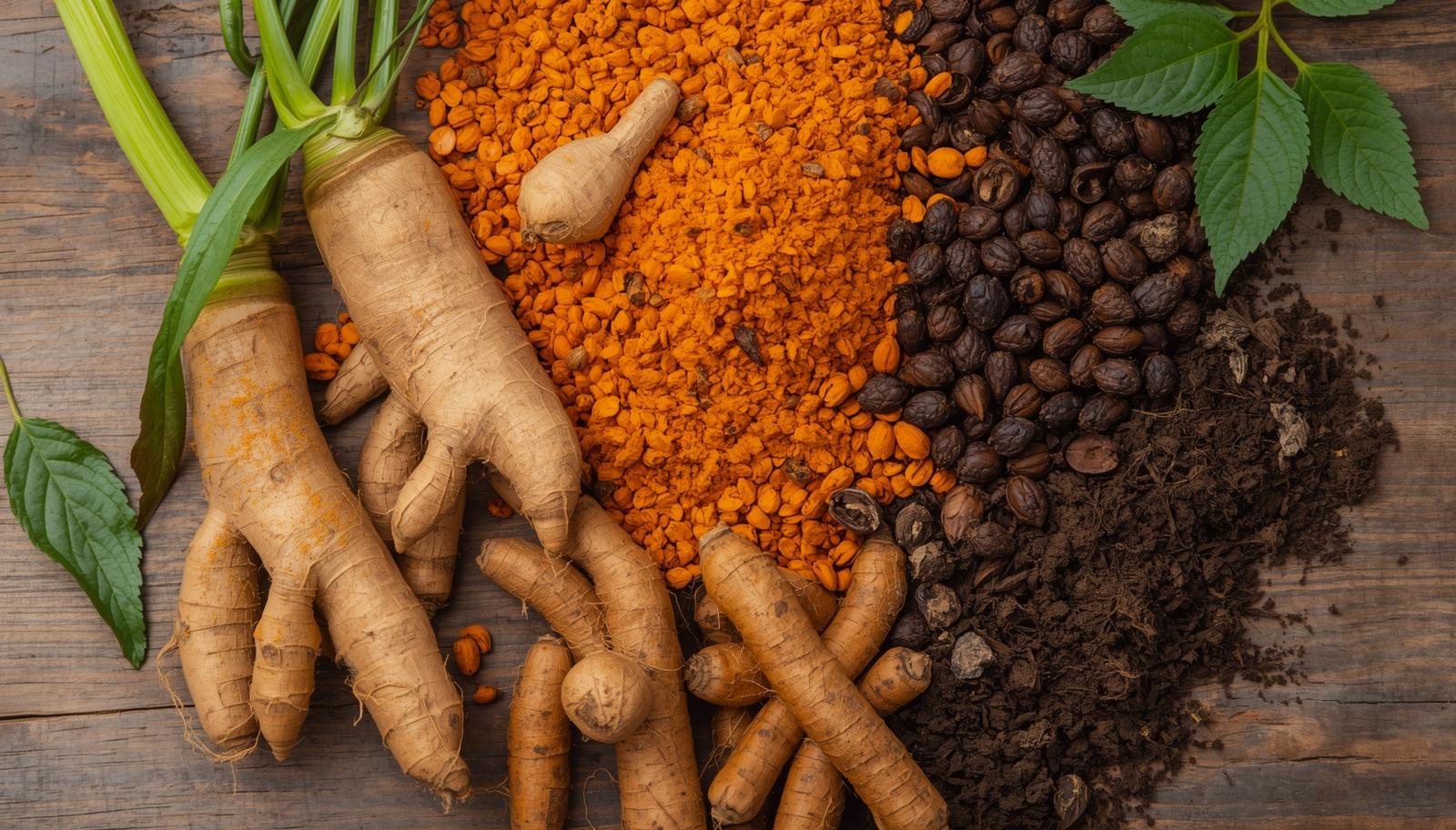
Bangladesh is more than its rice paddies and textile factories. In recent years, the country has quietly begun to revitalize its place on the global spice map, particularly in pepper (piper) and turmeric. For decades, these crops were either under-prioritized or limited to local consumption, but export incentives, rising global demand, and improving production capabilities now present a compelling opportunity.
According to The Daily Star, Bangladesh’s spice export earnings jumped by 25% year-on-year in early FY 2023-24, with turmeric, red dried chili, black cumin, coriander seed, and others leading the charge. But despite this surge, significant export‐readiness gaps remain from sterilization capacity to quality control, from market diversification to logistics.
In this article, we analyze Bangladesh’s potential in pepper and turmeric exports from a global perspective, uncovering the key drivers, challenges, and growth strategies that could unlock this agro-export frontier.
Why Pepper & Turmeric? The Global Demand Story
-
Turmeric’s Golden Opportunity
Globally, turmeric demand is rising rapidly driven by its use in health supplements, nutraceuticals, and functional foods. Supply is tightening, as traditional producers face land, cost, and labor pressures. Bangladesh is well-poised: according to Volza export data, between Oct 2023 and Sep 2024, Bangladesh made 2,382 turmeric shipments to 52 importing countries. That’s a 67% increase in volume compared to the previous twelve months a clear signal that Bangladeshi exporters are increasingly winning global buyers.
Turmeric powder exports have similarly taken off. Volza records show that in the same period, Bangladesh exported over 1,134 turmeric powder consignments to nearly 470 distinct buyers. This indicates not only scale, but also value-add potential powder generally commands higher margins than raw or whole turmeric.
-
The Pepper Potential
Pepper (piper) is another spice where Bangladesh can leverage a gap. According to IndexBox, the average export price of piper pepper from Bangladesh reached $4,232 per ton in 2024, up 11% from the previous year. This is significant for a crop that historically has not been a major export earner for the country.
Domestic challenges aside, the global black pepper market remains stable and lucrative, especially with rising demand in regions like North America, Europe, and parts of Asia for food, spice blends, and Ayurvedic products. Bangladesh’s climate and soil profiles can support piper cultivation, particularly if linked to modern farming and post-harvest handling.
Bangladesh’s Spice Export Landscape: Current Realities and Constraints
-
Export Momentum but Infrastructure Gaps
The Daily Star reported that Bangladesh earned US$ 11.25 million from spice exports in the first quarter of FY 2023-24. That’s a promising figure, yet it falls short of the country’s full potential. Why? One critical bottleneck: the lack of sterilization facilities.
Multiple exporters have raised concerns that Bangladesh doesn’t have enough “irradiation capacity” to meet stringent international standards for spices. Sterilization is vital for food safety compliance, especially for markets in the EU and North America, which require low microbial counts for spice powders. Without this, many Bangladeshi suppliers struggle to compete at scale.
Additionally, a report from the Bangladesh Agricultural Research Council (BARC) highlights another systemic gap: many spice farmers and processors rely on sub-standard storage and post-harvest practices, which increase microbial contamination and lower overall product quality. Such constraints make it difficult to produce export-grade turmeric and pepper in consistent volumes and quality.
-
Import-Export Dynamics
While Bangladesh is growing its spice exports, it is also a net importer for certain spices. Volza’s import data reveals that between Feb 2024 and Jan 2025, Bangladesh imported turmeric spice (HS code ~09103020) from abroad, reflecting a dynamic of domestic demand that is not fully matched by local production. This creates both a challenge and an opportunity a challenge because domestic farmers may face competition from imported raw materials, but an opportunity because local exporters can capture both local and international markets if cost, quality, and scale can be addressed.
-
Market Scale and Export Destination Risk
According to a Bangladesh market analysis by IndexBox, spices (excluding pepper and ginger) exported in 2023 reached a value of US$ 35 million, which is growing but modest relative to global spice trade volumes. Major export destinations for Bangladeshi spices include Gulf economies (Saudi Arabia, UAE, Oman), but penetration into Western markets remains limited.
Experts cite regulatory burdens and export‐readiness gaps as contributors to this under-diversification. For instance, limited access to internationally recognized sterilization and quality-certification facilities restricts the ability of Bangladeshi spice exporters to serve highly regulated markets.
Challenges & Opportunity Framework
Here’s a structured look at the key challenges Bangladesh faces in scaling pepper and turmeric exports and the corresponding opportunities that can unlock growth.
| Challenge | Opportunity |
| Lack of sterilization / irradiation capacity | Invest in public-private sterilization facilities; incentivize exporters to share costs |
| Sub-standard storage / post-harvest loss | Develop modern drying, packaging, and quality-control infrastructure; implement farmer training |
| Quality inconsistency | Adopt global spice quality standards; contract farming or consolidation to ensure uniformity |
| Export destinations too narrow | Diversify into Europe, North America, and Southeast Asia via trade promotion and market intel |
| Farmer awareness and scale | Organize cooperatives; support small farmers to scale and aggregate volume for exports |
| Logistical bottlenecks | Improve logistics chain for spice exports: specialized containers, better handling, cold storage if needed |
“While Bangladesh’s spice-export momentum is promising, the absence of large-scale irradiation and quality-certified processing facilities severely limits our competitiveness in high-value markets. Without addressing these foundational gaps, we risk losing ground to other emerging spice producers.” Exporter-leader in a major Bangladeshi spice company, speaking to The Daily Star.
This observation underscores how critical infrastructure and compliance are not just for volume but for unlocking premium markets.
Future Trends (2025-2030): Where Bangladesh Could Lead
-
Organic & Medicinal Exports
As global demand for natural health ingredients rises, there is room for Bangladesh to position turmeric (and pepper) in the nutraceutical and herbal supplement Organic cultivation and clean-label products can command higher price points.
-
Shared Infrastructure Models
Public-private partnerships (PPP) for spice sterilization, drying plants, and quality labs can significantly de-risk entry for smaller exporters.
-
Integrated Export Clusters
Establishing spice clusters in turmeric- and pepper-growing regions can optimize supply chains — reducing post-harvest loss, improving quality, and enabling larger-scale, export-ready aggregation.
-
Digital Traceability & Certification
Use blockchain or digital traceability tools to certify spice origin, quality, and processing. This is increasingly demanded by western markets looking for food safety transparency.
-
Sustainable Farming Practices
As ESG norms tighten, organizing farmers around sustainable agriculture (water-efficient farming, climate-smart practices) can be a unique selling point for Bangladeshi spice.
Strategic Take-Aways for Exporters & Trade Professionals
-
Prioritize capacity building
Exporters should collaborate with government and financial institutions to invest in sterilization and processing infrastructure.
-
Segment markets smartly
Rather than focusing solely on volume markets, target niche high-value markets (organic, medicinal, premium).
-
Scale through aggregation
Small farmers should be organized into cooperatives or clusters enabling economies of scale, better quality, and stronger export potential.
-
Enhance quality systems
Adopt global food-safety and quality standards (ISO, HACCP) to win regulated market access.
-
Leverage digital platforms
Use trade-intel platforms (like Volza) to identify global buyers, monitor demand trends, and track quality/certification needs.
Bangladesh’s resurgence in pepper and turmeric exports is not just a passing trend, it’s a strategic evolution. The country has the agro-base, the emerging market demand, and a growing export infrastructure to potentially become a serious player in the global spice economy.
Yet, without focused investment in sterilization, quality, farmer capacity, and market diversification, this potential will remain under-harvested. The time is ripe for exporters, policymakers, and investors to step up with bold, coordinated strategies.
The spice route revival isn’t a fairy-tale it’s a real, data-backed opportunity. And if Bangladesh masters this chapter, it could transform its agro-export narrative in an era where flavor, health, and sustainability drive global demand. Xtradegrok
Reference
- Bangladesh Agricultural Research Council (BARC) (2024). Study on post-harvest practices and quality challenges in spice production in Bangladesh. (Accessed: 27 November 2025).
- Daily Star (2023). ‘Earnings from spice exports rise 25%’, The Daily Star, 26 October. (Accessed: 27 November 2025).
- IndexBox (2024a). Piper pepper market analysis for Bangladesh: trends, export prices and insights. (Accessed: 27 November 2025).
- IndexBox (2024b). Bangladesh spice export statistics (except pepper and ginger): price and market overview. (Accessed: 27 November 2025).
- Volza (2024a). Bangladesh turmeric export shipments by country (Oct 2023 – Sep 2024). (Accessed: 27 November 2025).
- Volza (2024b). Bangladesh turmeric powder export volume and buyer data (2023–2024). (Accessed: 27 November 2025).
- Volza (2025). Bangladesh turmeric spice import records (Feb 2024 – Jan 2025). (Accessed: 27 November 2025).
- Reddit/r/OfficialIndia (2024). Discussion thread on turmeric production regions in India. (Accessed: 27 November 2025).