

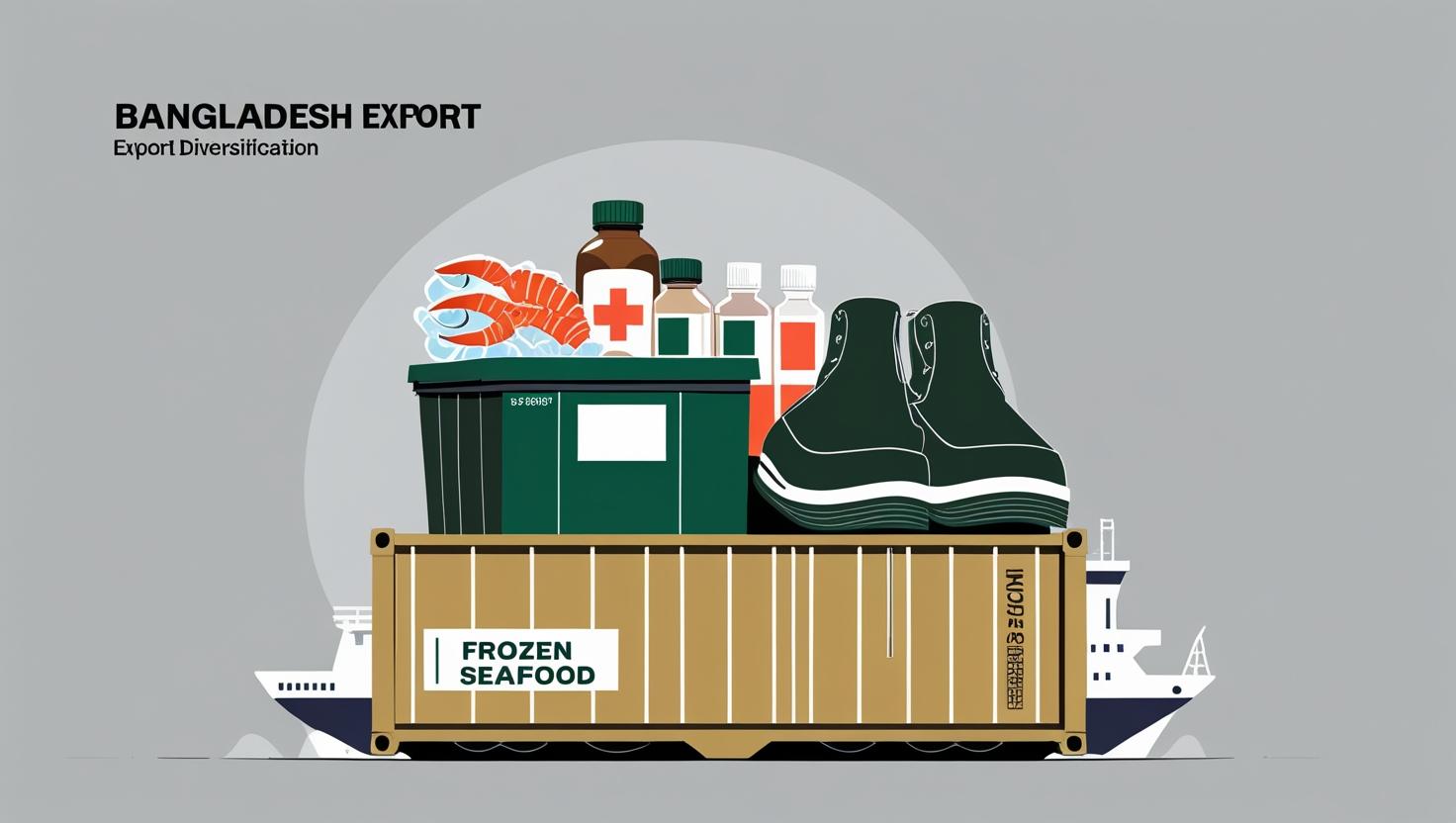
Bangladesh Beyond Garments
When people think of Bangladesh’s exports, one word dominates: garments. The Ready-Made Garments (RMG) sector contributes over 80% of the country’s total exports, making it the undisputed giant of the economy. But quietly, other industries are gaining ground — industries that could diversify Bangladesh’s trade portfolio, reduce dependency on a single sector, and create new avenues of foreign exchange earnings.
These non-garment exports are no longer just “side hustles” in the country’s trade strategy. They are turning into silent booms — reshaping Bangladesh’s global reputation as not just a garment hub but also a rising force in food processing, pharmaceuticals, and leather goods.
In this article, we explore three key non-garment export sectors that every business leader, policymaker, and trade partner should watch closely:
-
Frozen & Processed Foods: Bangladesh’s Cold Boom
-
Pharmaceuticals: Breaking Global Boundaries
-
Leather & Footwear: The Sustainable Comeback
Each of these is supported by real-time case scenarios, showing how Bangladeshi exporters are making waves beyond traditional markets.
Frozen & Processed Foods: Bangladesh’s Cold Boom
Bangladesh’s agriculture and aquaculture backbone has long supplied the domestic market, but over the last decade, it has transformed into a major export driver. The global demand for frozen and processed foods — from seafood to ready-to-cook meals — is skyrocketing, and Bangladesh is positioning itself as a competitive supplier.
The Rise of Frozen Shrimp & Fish
Shrimp has traditionally been Bangladesh’s export flagship in this category. But with Vietnam and India dominating global shrimp supply, Bangladesh exporters are diversifying into frozen fish fillets, processed hilsa, and ready-to-cook meals.
-
Case Example (Real-time):
A Khulna-based frozen food exporter recently signed a deal with Middle Eastern supermarkets for ready-to-fry fish nuggets. The key success factor wasn’t price — it was halal certification and traceability assurance. This shift shows how niche positioning can win Bangladesh higher-value contracts in competitive markets.
Processed Foods in GCC & EU Markets
Bangladesh’s processed food industry is quietly booming. Spices, pickles, frozen parathas, and snacks are making their way to migrant-heavy regions like the Gulf and Europe. For instance, Bangladeshi frozen parathas have become best-sellers in UK Bangladeshi and Indian grocery stores.
Key Challenges & Opportunities
-
Cold Chain Logistics: Export success depends on maintaining strict cold-chain integrity. Any breakdown affects shelf-life and credibility.
-
Global Certification: Exporters must meet HACCP, ISO 22000, and halal standards.
-
Untapped Potential: Processed agro products (like ready sauces and spices) could grow significantly in Southeast Asia and Africa.
Takeaway: Bangladesh’s “Cold Boom” is real. With investments in cold storage, branding, and compliance, this sector could add billions in exports within the next decade.
Pharmaceuticals: Breaking Global Boundaries
Perhaps the most remarkable silent boom is happening in Bangladesh’s pharmaceutical sector. Once dependent on imports, Bangladesh is now an exporter of medicine to more than 150 countries.
Success Story of Generic Drugs
Thanks to the TRIPS waiver under WTO, Bangladesh can manufacture patented drugs without paying royalties until 2033. This gave local pharmaceutical giants like Beximco, Square, and Incepta a head start in the global generics market.
-
Case Example (Real-time):
During the COVID-19 crisis, Bangladesh’s Beximco Pharma exported Remdesivir injections to countries like Nigeria and even supplied the UK’s NHS with certain medicines. This was a landmark moment: Bangladesh wasn’t just exporting — it was solving a global crisis.
Key Growth Markets
-
Africa: Rising healthcare demand and affordability gaps make Bangladeshi generics attractive.
-
Latin America: Countries like Venezuela and Ecuador are emerging as new buyers.
-
Regulated Markets: Bangladesh is slowly entering advanced markets with approvals from US FDA, UK MHRA, and EU EMA.
Opportunities in Biologics & Vaccines
While generics are the bread and butter, the next growth frontier is biosimilars and vaccines. Incepta already exports vaccines to several African nations. If this trend scales, Bangladesh could emerge as a pharma innovation hub.
Takeaway: Pharma exports are on track to cross USD 2 billion in the next few years. If the country sustains compliance and innovation, this sector may become the second-largest export earner after garments.
Leather & Footwear: The Sustainable Comeback
Leather has always been one of Bangladesh’s traditional exports. But after years of decline due to environmental concerns and compliance issues, the sector is making a comeback — this time with sustainability at the center.
From Raw Hide to Finished Products
Historically, Bangladesh exported raw hide and wet-blue leather, losing value to foreign processors. Now, exporters are moving up the value chain, producing finished goods like shoes, handbags, wallets, and belts.
-
Case Example (Real-time):
An Italian buyer recently sourced eco-friendly leather handbags from a Dhaka-based factory that uses water-based chemicals and waste recycling. The order was small compared to RMG contracts, but it opened doors to Europe’s premium leather fashion segment.
Footwear as the Next Big Thing
Leather footwear is the real star. Companies like Apex Footwear and Bay are exporting to major retailers in Europe. Bangladesh-made shoes are now sold in Germany, Spain, and Japan — a quiet revolution most people don’t know about.
Challenges & the Way Forward
-
Tannery Relocation: The relocation of tanneries to Savar is still incomplete, delaying full environmental compliance.
-
Global Branding: Unlike Vietnam or Italy, Bangladesh has little global branding for its leather products.
-
Sustainability Certifications: Gaining LEED and LWG certifications will be critical to win long-term buyers.
Takeaway: If Bangladesh resolves compliance bottlenecks, leather and footwear could reach USD 5–6 billion in exports within a decade.
Why These Sectors Matter for Bangladesh’s Future
Relying solely on garments is risky. Any global demand shock, tariff change, or compliance issue can destabilize the economy. By growing exports in foods, pharma, and leather, Bangladesh can:
-
Diversify Risks – Reducing dependence on one sector.
-
Create Jobs Beyond Garments – Especially in rural and semi-urban areas.
-
Boost Foreign Investment – As global investors look beyond RMG.
-
Strengthen Trade Relations – By offering multiple export products to partner countries.
The Silent Boom Is Here
Bangladesh’s export future will not be written by garments alone. The silent boom of frozen foods, pharmaceuticals, and leather goods is already underway. The question is — will policymakers, exporters, and investors give these sectors the attention and support they deserve?
For stakeholders in India, the Middle East, Africa, and beyond, now is the time to explore partnerships in these emerging trade goldmines. Γραμμή Fintrion
Bangladesh is no longer just “Made in Garments” It’s becoming “Made in Everything”
References
- Ahmed, S. & Islam, M. T. (2023). ‘Beyond RMG: Analyzing the Growth Potential of Non-Traditional Exports in Bangladesh’, Journal of International Trade and Economic Development, 32(4), pp. 512–530.
- Bangladesh Export Promotion Bureau (EPB). (2023). Export Performance Statistics: Fiscal Year 2022–2023. Dhaka: Government of the People’s Republic of Bangladesh. (Accessed: 24 October 2023).
- Beximco Pharmaceuticals. (2022). Annual Report 2021–2022. Dhaka: Beximco Pharma.
- Hossain, M. I. & Rahman, K. (2022). ‘The Pharmaceutical Industry in Bangladesh: Growth, Challenges, and Global Opportunities’, South Asian Journal of Business Studies, 11(3), pp. 305–322.
- Khan, S. R. (2023). ‘Leather Industry Revival in Bangladesh: Compliance, Sustainability and Export Diversification’, Journal of Sustainable Trade and Commerce, 15(2), pp. 88–105.
- Ministry of Commerce. (2023). National Export Strategy 2021–2024: Diversifying Export Basket. Dhaka: Government of the People’s Republic of Bangladesh.
- World Trade Organization (WTO). (2021). TRIPS Agreement and the Transition Period for LDCs. Geneva: WTO. (Accessed: 24 October 2023).
- Zaman, R. & Chowdhury, N. (2023). ‘From Fields to Freezers: The Rise of Bangladesh’s Processed Food Exports’, Agribusiness and Food Trade Journal, 9(1), pp. 45–62.



thanks for info.