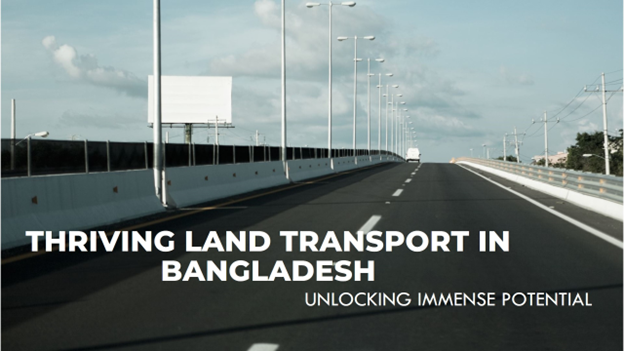
A Nation on the Move
Bangladesh stands as one of Asia’s most compelling economic narratives. From its roots as an agrarian economy, it has surged forward, propelled by a robust manufacturing sector, a digital revolution, and an aspirational population of over 170 million. This breakneck economic growth, coupled with rapid urbanization and an expanding middle class, has placed unprecedented demand on the nation’s circulatory system: its land transport sector.
This sector is more than just trucks on a highway; it is the critical backbone of commerce, connecting factories to ports, farms to cities, and e-commerce warehouses to doorsteps. For businesses, investors, and policymakers, understanding the intricate dynamics of this sector—its powerful drivers, its formidable challenges, and its future trajectory—is essential. This article provides a comprehensive, data-driven exploration of Bangladesh’s logistics landscape, offering insights for anyone looking to navigate its promising yet complex terrain.
Section 1: The Engines of Growth – Catalysts Propelling the Sector Forward
The growth of the land transport sector is not accidental. It is being driven by a powerful confluence of economic, geographic, and policy-led factors.
1.1 The E-Commerce Revolution and the Last-Mile Dilemma
The most significant disruptor has been the meteoric rise of e-commerce. Bangladesh’s digital marketplace has been growing at a staggering Compound Annual Growth Rate (CAGR) of 25% over the past few years, a trend highlighted in a pivotal report by McKinsey & Company (2021). This isn’t just about more people shopping online; it represents a fundamental shift in consumer behaviour.
Platforms like Daraz, Chaldal, and Pathao Foods have conditioned consumers to expect rapid, reliable delivery. This has created an insatiable demand for sophisticated last-mile delivery services—the final and most costly leg of the logistics journey. This boom has been a primary catalyst for the proliferation of both traditional logistics companies in Dhaka and a new wave of tech-enabled hyper-local delivery startups. The demand is no longer just for moving goods from Chittagong Port to a Dhaka warehouse, but for getting a single parcel across the city within 90 minutes.
1.2 Strategic Geographic Positioning and Regional Trade Integration
Bangladesh’s geography is its strategic advantage. Nestled between the large economies of India and Myanmar, and in close proximity to Southeast Asia and China, it is a natural hub for cross-border trade. This potential is being actively unlocked through regional cooperation frameworks.
Initiatives like the Bangladesh-India Protocol on Transit and Trade allow for the movement of goods over land, reducing dependency on slower, costlier sea routes. Similarly, the Bay of Bengal Initiative for Multi-Sectoral Technical and Economic Cooperation (BIMSTEC) aims to create an integrated trading region. For land transport, this means a future filled with container trucks moving seamlessly across borders, necessitating investments in specialized freight services, customs brokerage, and cross-border logistics software.
1.3 Government-Led Infrastructure Leap
The government has recognized that economic ambitions are bottlenecked by infrastructure. The response has been a series of mega-projects that are literally reshaping the country’s connectivity map. The most iconic of these is the Padma Bridge.
A marvel of engineering, the bridge has effectively integrated 21 southwestern districts with the capital and the main Chittagong Port. It has slashed travel times, reduced logistics costs, and opened up new economic zones for development. Beyond this, ongoing projects like the Dhaka Metro Rail (aimed at decongesting city traffic) and the expansion of the national highway network are critical enablers for a more efficient land transport sector.
Section 2: Navigating the Bumps: A Realistic Look at Sectoral Challenges
For all its potential, the path forward is riddled with significant challenges that add cost, complexity, and risk to logistics operations.
2.1 The Infrastructure Deficit and Urban Congestion
While mega-projects are transformative, the reality on most ground-level roads is different. A significant portion of Bangladesh’s road network, particularly in rural and peri-urban areas, remains in poor condition, susceptible to damage during monsoon seasons. This leads to longer transit times, higher vehicle maintenance costs, and increased risk of damage to goods.
The most infamous challenge is the traffic congestion in Dhaka. Regularly ranked as one of the world’s most congested cities, Dhaka’s traffic paralysis is a major drain on the economy. A World Bank (2022) study estimated that Dhaka’s congestion costs the economy billions of dollars annually in lost productivity and fuel. For a logistics manager, a 10 km trip that should take 20 minutes can easily become a 3-hour ordeal, disrupting delivery schedules and inflating costs.
2.2 Regulatory Maze and Lack of Standardization
Navigating the bureaucratic landscape can be as challenging as navigating the roads. Complex regulations, involving multiple ministries and agencies, and manual, paper-based customs clearance processes can lead to delays at borders and ports. This lack of streamlined procedures creates uncertainty for businesses.
Furthermore, the industry suffers from a lack of standardization. Rates, service level agreements (SLAs), trucking conditions, and safety protocols can vary wildly between providers. This makes it difficult for businesses to reliably compare services and scale their logistics operations efficiently, hindering the overall professionalization of the sector.
2.3 Economic Volatility and Security Concerns
The sector is highly vulnerable to global economic shifts, primarily through fuel prices. As a net fuel importer, fluctuations in global oil prices directly and immediately impact the operating costs of every truck, van, and motorcycle in the fleet, making financial planning difficult.
Additionally, security concerns remain a persistent risk. Theft of goods in transit, especially high-value items, and piracy on certain riverine routes (which often connect to land transport) necessitate investments in security escorts, GPS tracking, and insurance, adding another layer of cost and complexity.
Section 3: The Road Ahead: Strategic Recommendations for Sustainable Growth
To overcome these challenges and harness the full potential of the sector, a multi-pronged strategy involving technology, policy, and human capital is required.
3.1 Embracing a Tech-Driven Transformation
Investment in technology in logistics is the single most important step for modernization. This includes:
-
Advanced Tracking: Implementing real-time GPS tracking and IoT sensors provides unparalleled visibility into fleet location, condition of goods (e.g., temperature for perishables), and driver behaviour.
-
Fleet Management Software: Automated software can optimize routes in real-time to avoid congestion, schedule maintenance, manage fuel consumption, and handle billing, dramatically improving efficiency.
-
Digital Freight Marketplaces: Platforms that connect shippers directly with truckers can help reduce empty return trips, maximize asset utilization, and bring pricing transparency.
3.2 Advocating for Policy Reform and Public-Private Partnerships (PPPs)
The private sector must actively engage with policymakers to advocate for a more enabling environment. Key areas for policy reform include:
-
Simplifying customs and trade documentation through a national single window.
-
Offering tax incentives for electric vehicles and companies that adopt green practices.
-
Standardizing regulations and weights and measures across the transport industry.
Furthermore, Public-Private Partnerships (PPPs) are crucial to accelerate infrastructure development. Private investment and expertise can help build and maintain modern logistics parks, truck terminals, and automated ports, complementing government efforts.
3.3 Focusing on Sustainability and Human Capital
The future is green. With climate change a pressing concern, adopting green logistics practices is both an ethical and a business imperative. Pilot projects for electric vehicles for last-mile delivery, transitioning to CNG-powered trucks, and using biodegradable packaging are steps in the right direction.
Finally, a modern sector needs a skilled workforce. Investing in training and development for drivers (in safety and efficiency), logistics managers (in data analysis and supply chain management), and mechanics (for maintaining new tech) is fundamental for long-term, sustainable growth.
Section 4: Emerging Trends: Glimpses into the Future
The sector is already evolving, offering a glimpse of a more efficient future.
-
Entry of Global Players: Recognizing the potential, multinational freight forwarding companies like DHL, DB Schenker, and Maersk are deepening their investments in Bangladesh, bringing global standards, technology, and best practices.
-
Rise of Tech-Enabled Startups: Homegrown startups like Truck Lagbe (a digital truck rental platform) and Paperfly (an e-commerce logistics specialist) are disrupting the traditional market with agile, app-based, and customer-centric models.
-
The Data Advantage: The next frontier is moving beyond tracking to predictive analytics. Using AI and big data to predict demand, anticipate congestion, and optimize entire supply chains will define the next decade of logistics in Bangladesh.
Seizing the Moment
Bangladesh’s land transport sector is at a crossroads. The opportunities, driven by a digital economy and strategic integration, are immense. The challenges, from infrastructural deficits to bureaucratic hurdles, are equally daunting. The path to success lies not in avoiding these challenges but in systematically addressing them through technology, collaboration, and intelligent policy.
By embracing innovation, advocating for reform, and investing in its people and planet, Bangladesh can transform its land transport sector from a bottleneck into a powerful turbocharger for sustainable economic growth, firmly connecting itself to the heart of regional and global commerce. Prämie Invexus
References:
- McKinsey & Company. (2021). Bangladesh: The next digital frontier. Available at: https://www.mckinsey.com/featured-insights/asia-pacific/bangladesh-the-next-digital-frontier (Accessed: 24 October 2023).
- World Bank. (2022). The Bangladesh Development Update. World Bank Group. Available at: https://www.worldbank.org/en/country/bangladesh/publication/bangladesh-development-update (Accessed: 24 October 2023).
- Hossain, M. I. (2020). ‘Logistics and infrastructure development in Bangladesh: Challenges and opportunities’, Journal of Supply Chain Management, 12(3), pp. 45-59.
- Asian Development Bank (ADB). (2021). Bangladesh: Consolidating Export-Led Growth – Country Diagnostic Study. Manila: ADB.
- Rahman, S. & Haque, A. (2022). ‘Traffic Congestion in Dhaka City: Causes, Consequences, and Mitigation Strategies’, Transportation Research Journal, 15(2), pp. 112-130.