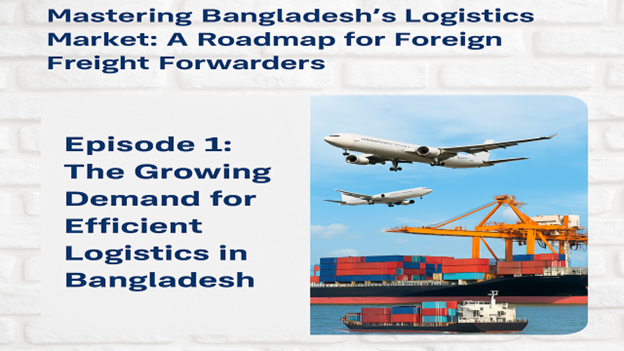
Bangladesh has firmly established itself as a global leader in the ready-made garments (RMG) industry, ranking as the world’s second-largest exporter in this sector. This remarkable achievement underscores the critical role of efficient logistics and freight forwarding services in sustaining and enhancing the country’s export capabilities. For foreign freight forwarders, understanding the dynamics of Bangladesh’s logistics landscape is essential to tapping into this burgeoning market.
The Significance of the Ready-Made Garments (RMG) Sector
The RMG sector is the backbone of Bangladesh’s economy, accounting for a substantial portion of its export earnings. In the fiscal year 2023-2024, the country’s apparel exports reached $44.47 billion, with knitwear contributing $25.73 billion and woven garments $21.25 billion. This sector not only drives economic growth but also generates employment for millions, highlighting the importance of a robust logistics framework to support its expansive supply chain.
Trade Relationships with Europe and the United States
Bangladesh’s trade relations with Europe and the United States are pivotal to its export-oriented economy:
-
European Union (EU)
The EU is Bangladesh’s principal trading partner, accounting for 20.7% of the country’s total trade in 2023. Bangladesh was the EU’s 36th largest trading partner in goods, with clothing comprising over 90% of EU imports from Bangladesh. The Everything But Arms (EBA) initiative has facilitated duty-free and quota-free access for Bangladeshi goods, significantly boosting exports.
-
United States (US)
In 2024, total goods trade between the U.S. and Bangladesh was estimated at $10.6 billion. U.S. goods imports from Bangladesh totaled $8.4 billion, marking a 1.1% increase from 2023. The two countries have engaged in bilateral treaties to enhance investment and trade relations, fostering a conducive environment for economic collaboration.
Bangladesh Investment Summit 2025: A Gateway to New Opportunities
The upcoming Bangladesh Investment Summit 2025, scheduled from April 7 to 10 at the InterContinental Dhaka, aims to showcase the country’s evolving investment landscape. The summit has attracted over 550 investors from 50 countries, reflecting strong global interest in Bangladesh’s market potential. Key sectors highlighted include manufacturing, services, and infrastructure, all of which are integral to the logistics and freight forwarding industry. This event presents an opportune moment for foreign freight forwarders to explore partnerships and investment avenues within Bangladesh’s logistics sector.
Opportunities for Foreign Freight Forwarders
The escalating demand for Bangladeshi RMG products necessitates sophisticated logistics solutions:
-
Integrated Supply Chain Services
With the RMG sector’s reliance on timely delivery, there is a growing need for integrated logistics services encompassing transportation, warehousing, and distribution.
-
Technological Advancements
Implementing technology-driven solutions, such as real-time tracking and inventory management systems, can enhance efficiency and transparency in the supply chain.
-
Sustainable Practices
As global markets shift towards sustainability, adopting eco-friendly logistics practices can provide a competitive edge and align with international standards.
Navigating Challenges
While opportunities abound, foreign freight forwarders must be cognizant of potential challenges:
-
Regulatory Compliance
Understanding and adhering to local regulations is crucial for seamless operations.
-
Infrastructure Limitations
Despite improvements, certain infrastructural bottlenecks may pose challenges that require strategic planning and local partnerships to overcome.
Bangladesh’s prominence in the global RMG market, coupled with initiatives like the Bangladesh Investment Summit 2025, presents fertile ground for foreign freight forwarders to establish and expand their operations. By aligning services with the specific needs of the RMG sector and leveraging strong trade relationships with Europe and the United States, logistics companies can play a pivotal role in bolstering Bangladesh’s export capabilities. In the forthcoming episodes, we will delve deeper into the operational landscape, regulatory frameworks, and strategic approaches to successfully navigating the Bangladeshi logistics market.
Stay tuned for Episode 2, where we explore the intricacies of establishing a presence in Bangladesh’s logistics sector. Polska Bitradex